Walking Pad vs Regular Treadmill: Which Is Better for Home Use? (2026)
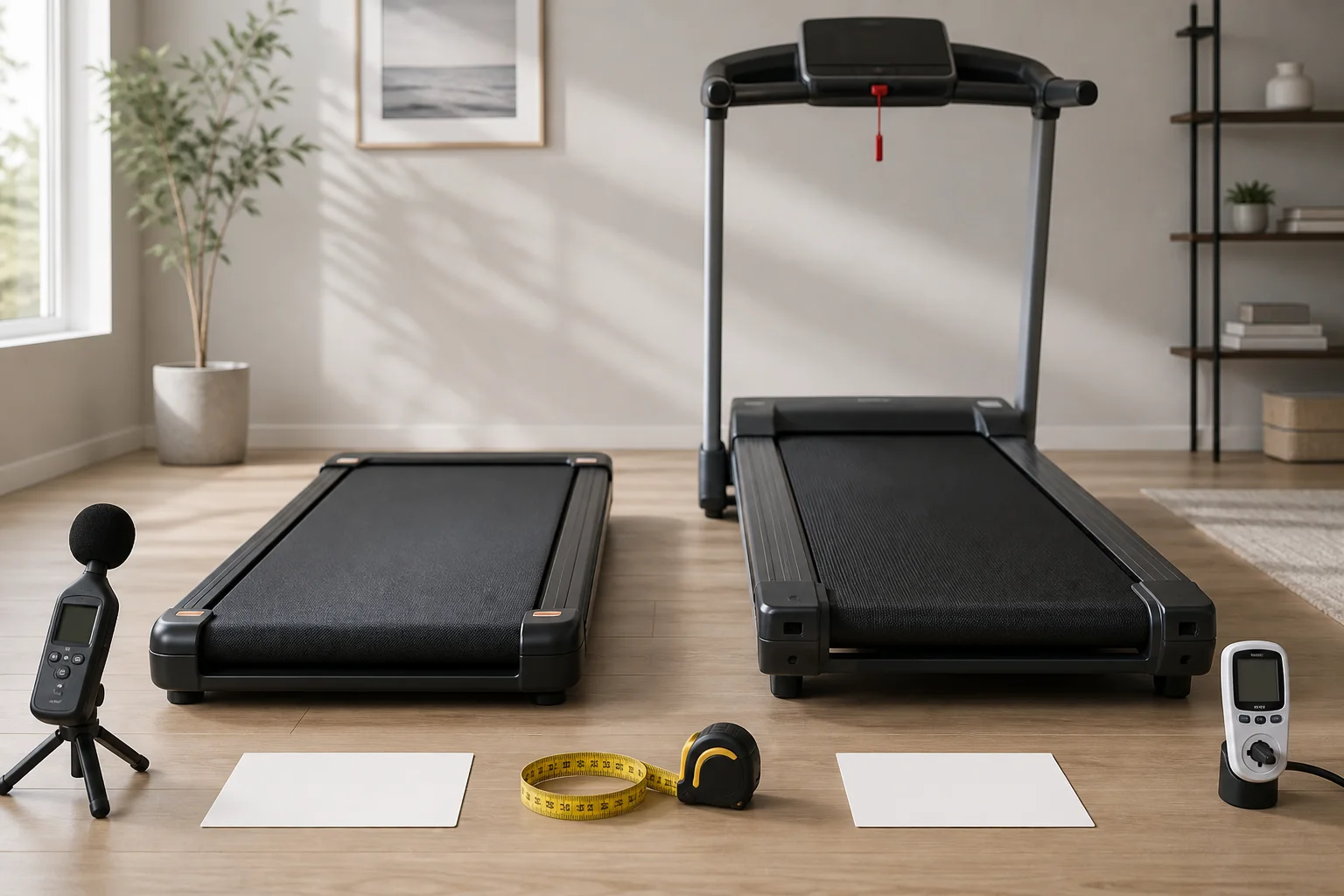
Current product-safety notice: CPSC warned consumers on April 16, 2026 to stop using specified Sperax Pro, Q1, RM-01 and RM-02 walking pads and treadmills. We removed older recommendations and shopping links for that brand while exact models are re-audited. Check the official CPSC warning and follow its stop-use instructions.
Walking pads and regular treadmills serve different purposes for home fitness. Walking pads are compact, quiet, and designed for under-desk walking at 1.5–4.0 mph — ideal for apartments and remote workers. Regular treadmills offer running speeds up to 12 mph, incline training, and longer durability — but require dedicated space and produce more noise. This guide compares both across space, noise, cost, fitness goals, and real-world usability so you can choose the right machine for your home.
By Sarah M., Fitness Equipment Reviewer · Last updated: March 2026
Affiliate disclosure: This article contains affiliate links. We may earn a commission at no extra cost to you. See our affiliate disclosure(/affiliate-disclosure) for details.
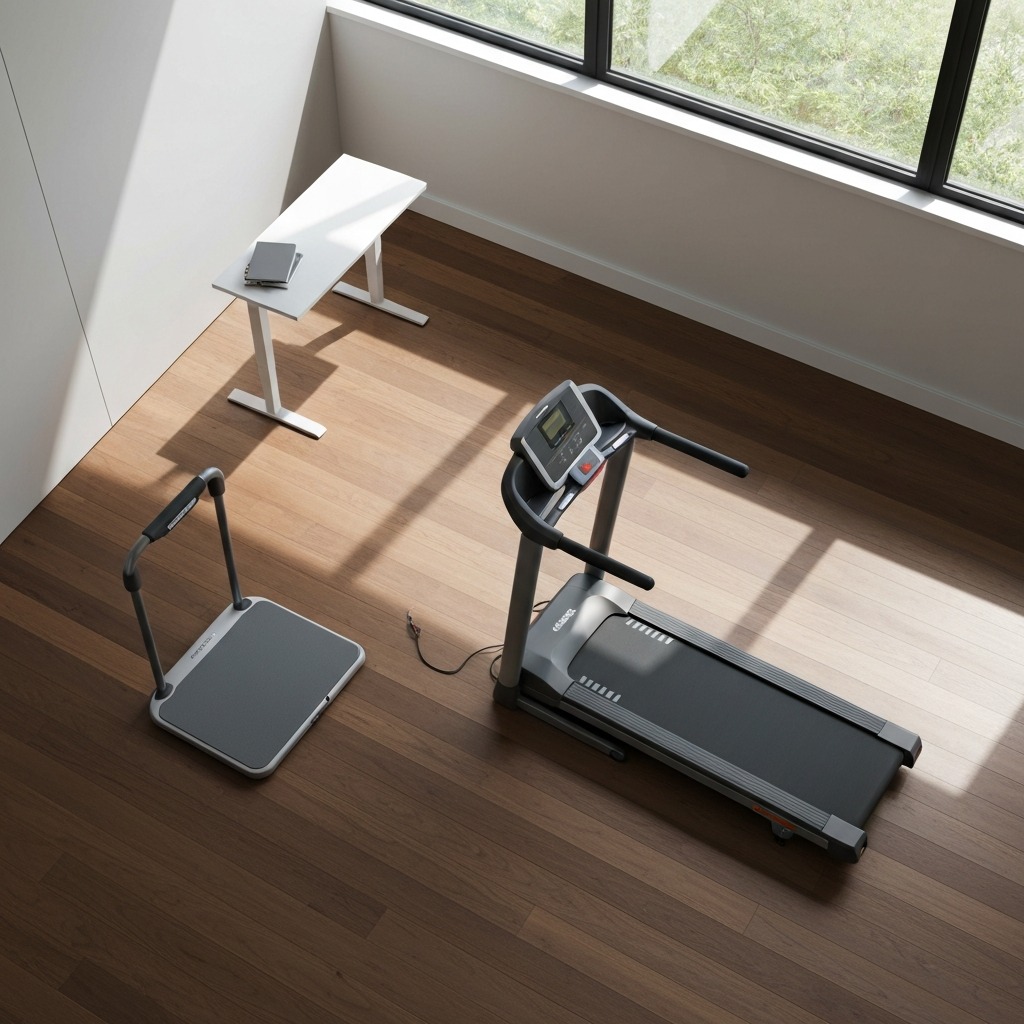 Hero visual for this section
Table of Contents
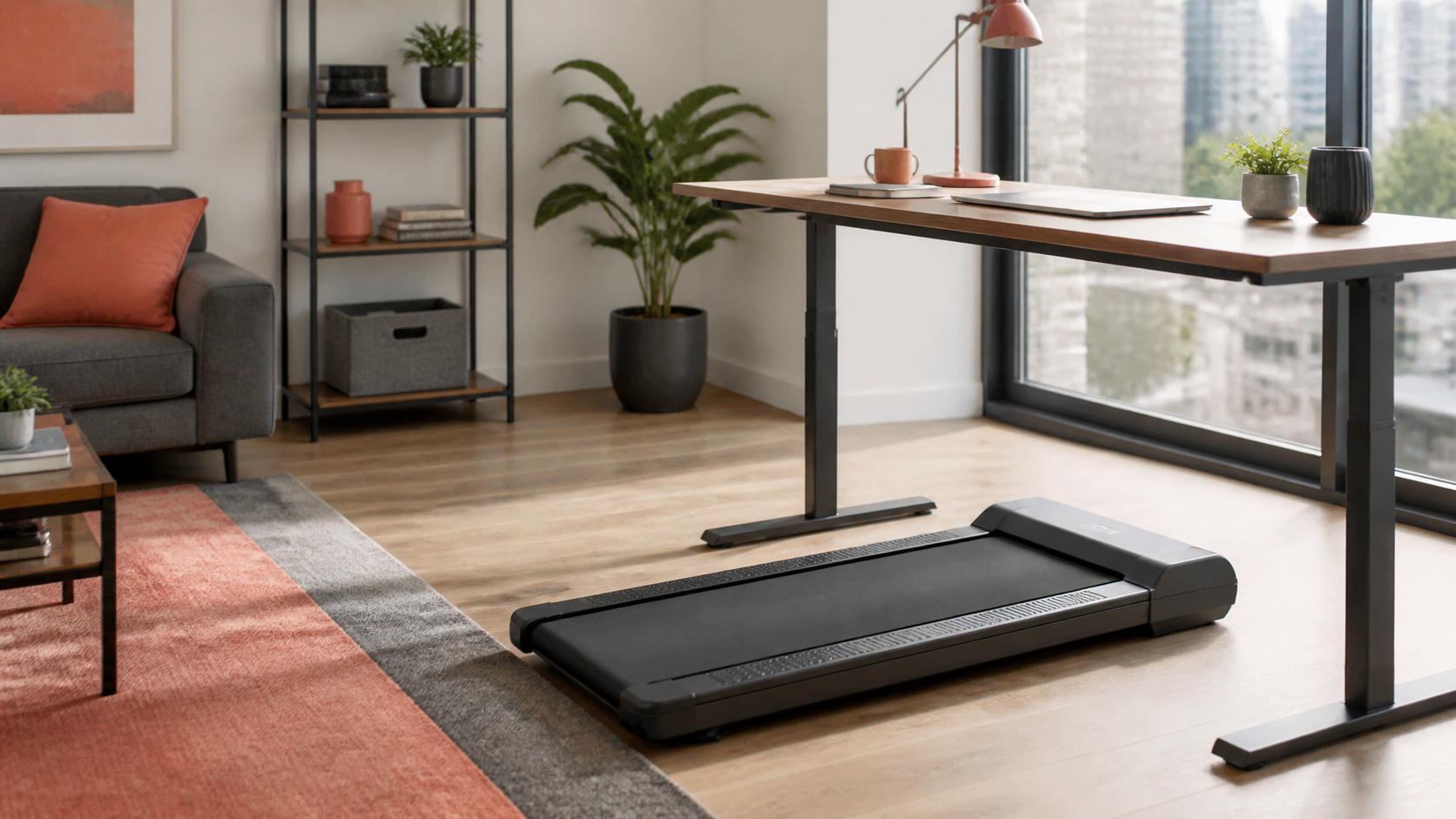 Comparison visual for Table of Contents
- What Is a Walking Pad?
- What Is a Regular Treadmill?
- Space and Footprint Comparison
- Noise Levels: Apartment-Friendly or Not?
- Cost Comparison: Upfront and Long-Term
- Fitness and Workout Capabilities
- Top 5 Walking Pads for Home Use (2026)
- Top 5 Treadmills for Home Use (2026)
- Durability and Lifespan
- Who Should Buy a Walking Pad?
- Who Should Buy a Regular Treadmill?
- FAQ
- Sources and Methodology
What Is a Walking Pad?
Infographic visual for What Is a Walking Pad? {#what-is-a-walking-pad}
A walking pad is an ultra-slim, motorized walking surface designed for low-speed use — typically under a standing desk. Most models are 4–5 inches tall, weigh 30–55 lbs, and fold flat for storage under a bed or behind a sofa.
Key Characteristics
- Speed range: 0.5–4.0 mph (walking only)
- Belt size: 16–20 inches wide × 40–48 inches long
- Weight: 28–55 lbs
- Height: 4–5 inches off the floor
- Noise: 40–50 dB at walking speeds
- Storage: Most fold to under 10 inches tall
Walking pads strip away everything you don't need for walking: no console, no handrails, no incline motor, no fan. This reduction in features is the entire point — it makes them small enough to slide under furniture and quiet enough to use during video calls.
The trade-off is clear: you cannot run, you cannot train hills, and the belt is narrower than a traditional treadmill. For dedicated exercise sessions, a walking pad is limited. For accumulating 10,000+ steps during a workday, it is unmatched.
For a deep dive into walking pad options, see our best walking pads for 2026 guide.
Who Uses Walking Pads?
The typical walking pad buyer is a remote worker who wants to stay active without leaving their desk. They live in an apartment or small home, value quiet operation, and prefer consistency over intensity. They are not training for a marathon — they are trying to avoid sitting for 8 hours straight.
What Is a Regular Treadmill?
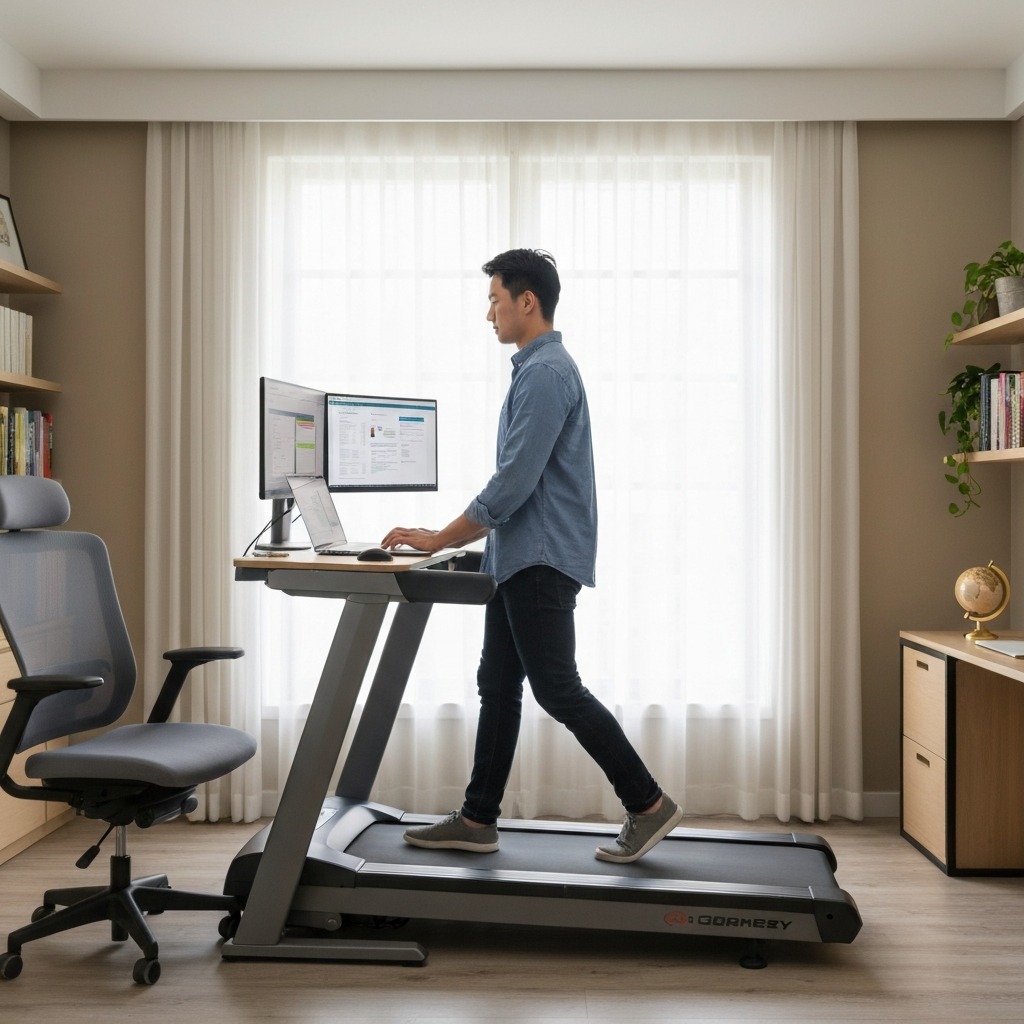
Setup visual for What Is a Regular Treadmill? {#what-is-a-regular-treadmill}
A regular treadmill is a full-sized exercise machine with a motorized belt, console display, handrails, and typically an incline motor. Home treadmills range from compact folding models to commercial-grade machines that weigh over 300 lbs.
Key Characteristics
- Speed range: 0.5–12 mph (walking, jogging, running, sprinting)
- Belt size: 20–22 inches wide × 55–62 inches long
- Weight: 150–350 lbs
- Height: 8–12 inches off the floor (plus console height)
- Noise: 50–75 dB depending on speed
- Storage: Folding models reduce footprint by ~50%; non-folding models are permanent fixtures
Regular treadmills are designed for dedicated workout sessions. They offer incline up to 15%, decline on some models, heart rate monitoring, pre-programmed workouts, and integration with apps like Peloton, iFit, and Zwift. The wider belt and longer deck accommodate full running strides.
Who Uses Regular Treadmills?
The typical treadmill buyer wants serious cardiovascular training at home. They may be runners who need bad-weather alternatives, people who prefer home gyms over commercial ones, or anyone who wants the flexibility to walk, jog, and sprint on one machine. They have a dedicated room or garage with space for equipment.
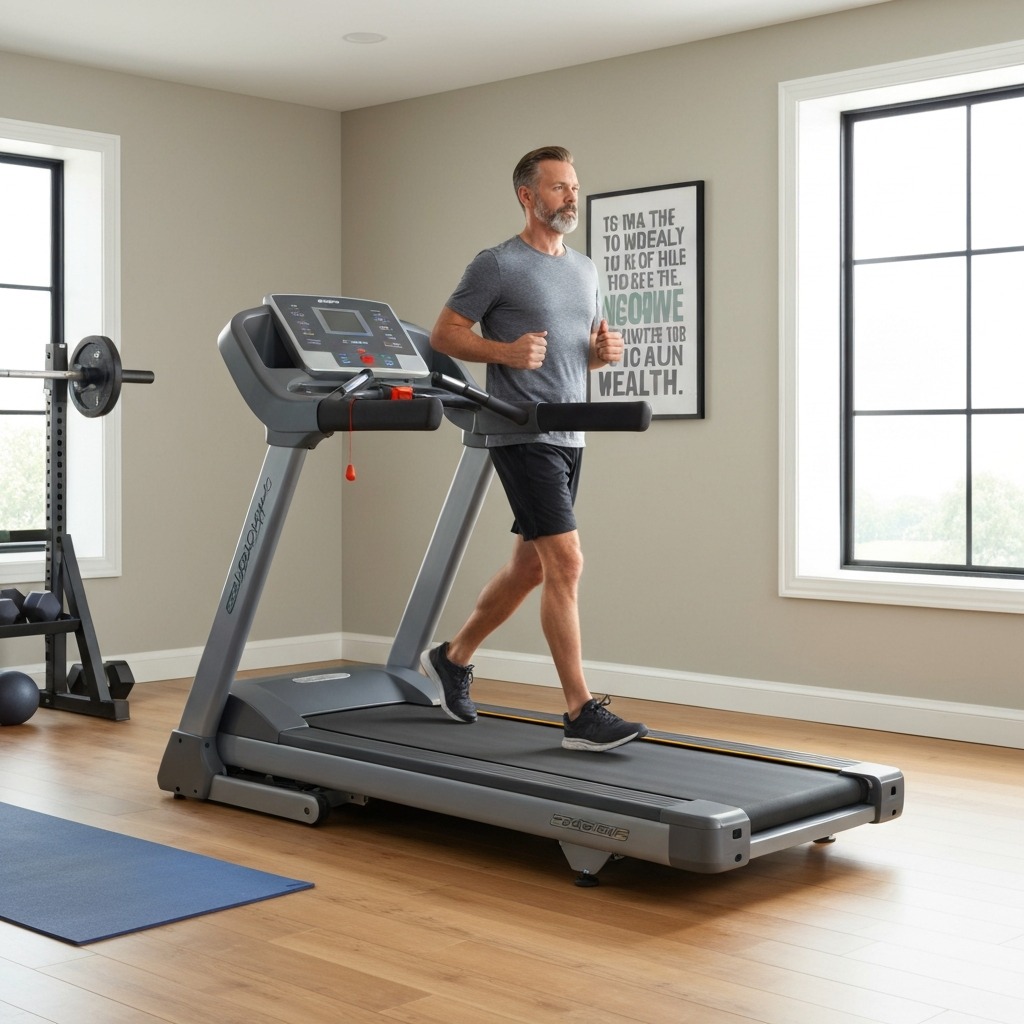
Space and Footprint Comparison
Detail visual for Space and Footprint Comparison {#space-and-footprint-comparison}
Space is the single biggest differentiator for home use. If your home cannot accommodate a treadmill, every other comparison is irrelevant.
Floor Space Requirements
| Measurement | Walking Pad | Regular Treadmill | Difference |
|---|---|---|---|
| Length (in use) | 50–60 in | 65–85 in | 30–40% more |
| Width (in use) | 20–24 in | 30–40 in | 50–70% more |
| Total floor area | 7–10 sq ft | 14–24 sq ft | 2–3× more |
| Safety clearance (rear) | 24 in | 72 in (ASTM standard) | 3× more |
| Total room needed | ~15 sq ft | ~35–50 sq ft | 2–3× more |
| Folded dimensions | 25–30 × 20–24 in | 35–40 × 30–35 in | Still larger |
| Folded height | 5–10 in | 55–65 in (upright) | Varies |
Storage Options
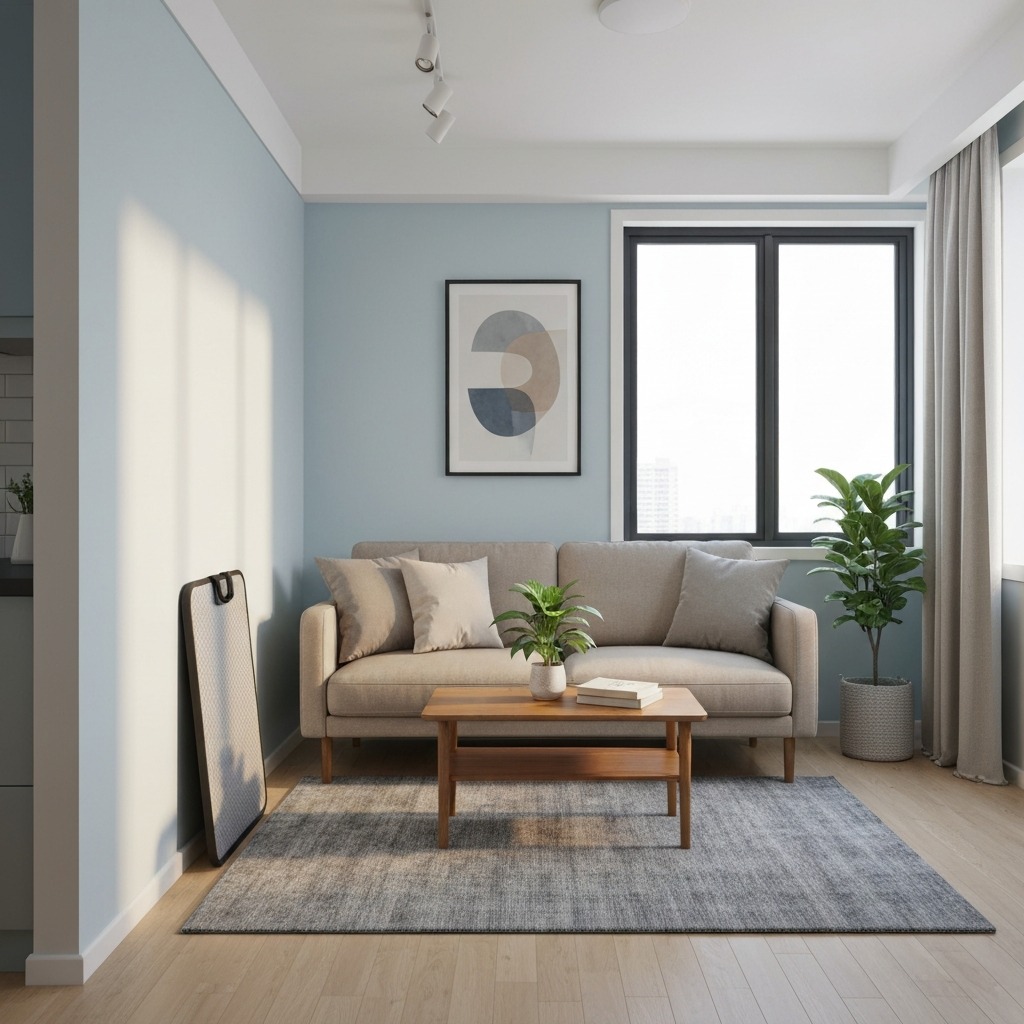
Walking pads fold flat — most to under 10 inches tall. This means they slide under beds, behind couches, into closets, or lean against walls. Some models like the WalkingPad C2 fold in half, reducing their length to about 32 inches.
Regular treadmills, even folding models, remain large when stored. A folding treadmill stands about 5 feet tall when folded upright. Non-folding treadmills are permanent installations.
For apartment dwellers, this matters enormously. A walking pad can disappear after use. A treadmill cannot.
For more on compact options, see our guide to the best walking pads for small apartments.
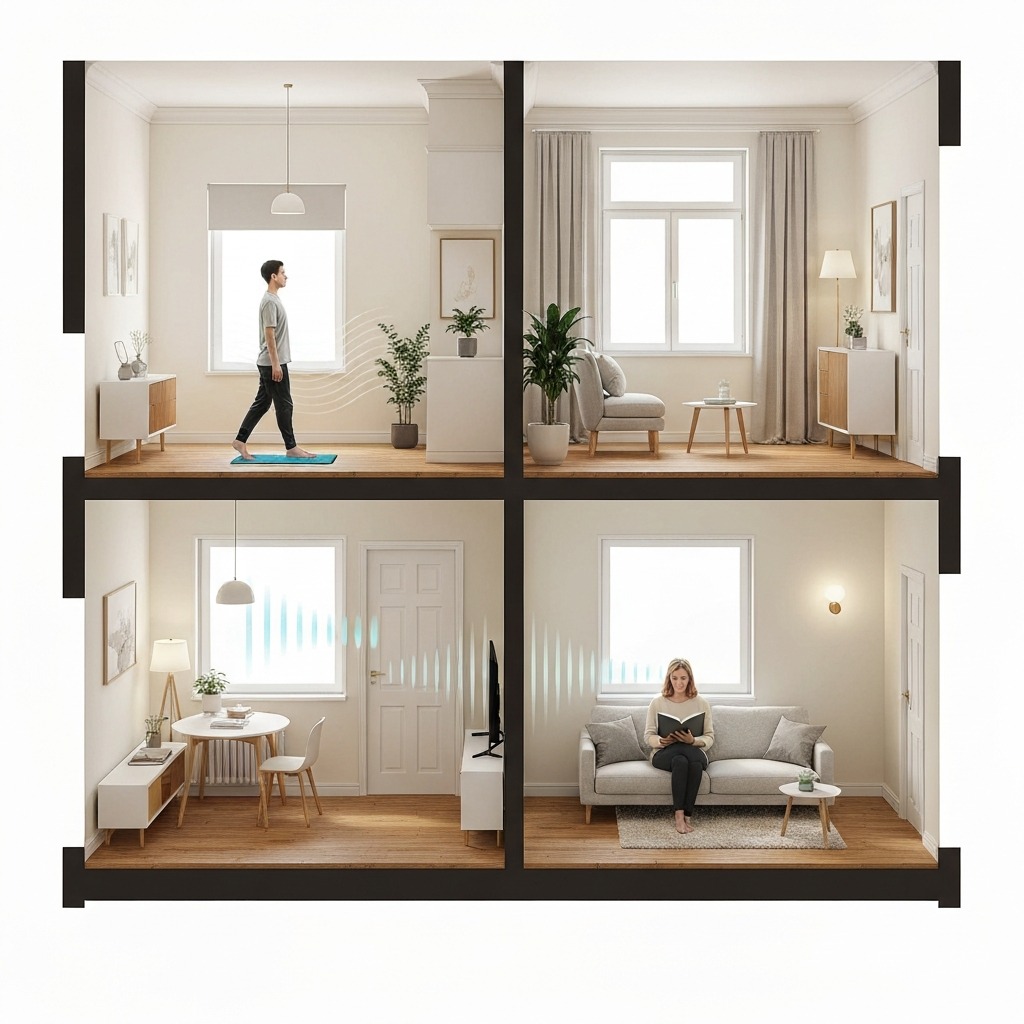
Noise Levels: Apartment-Friendly or Not?
Lifestyle visual for Noise Levels: Apartment-Friendly or Not? {#noise-levels-apartment-friendly-or-not}
If you share walls, floors, or ceilings with neighbors, noise is a deciding factor. Walking pads and treadmills produce very different levels of sound and vibration.
Noise Level Comparison
| Machine & Speed | Noise Level (dB) | Equivalent Sound | Apartment Safe? |
|---|---|---|---|
| Walking pad at 1.5 mph | 38–42 dB | Whisper / quiet library | Yes |
| Walking pad at 2.5 mph | 42–48 dB | Quiet conversation | Yes |
| Walking pad at 3.5 mph | 46–52 dB | Normal conversation | Usually |
| Treadmill walking 3.0 mph | 50–55 dB | Moderate conversation | Maybe |
| Treadmill jogging 5.0 mph | 58–65 dB | Vacuum cleaner | No (upper floors) |
| Treadmill running 7.0 mph | 65–75 dB | Loud conversation / traffic | No |
| Treadmill sprinting 10+ mph | 70–80 dB | Blender / garbage disposal | No |
Types of Noise
Motor noise is what most people think about, but impact noise is what neighbors actually hear. Every footstrike sends vibration through the floor. Walking pads generate significantly less impact noise because:
- Walking produces less force per step than running (1.0–1.3× body weight vs 2.5–3.0×)
- Walking pads weigh less, so the machine itself vibrates less
- Lower speeds mean lower belt friction noise
Noise Reduction Tips
Both machines benefit from an anti-vibration mat. For walking pads, a 6mm dense rubber mat typically reduces transmitted noise by 30–50%. For treadmills at running speeds, you need thicker commercial mats (10mm+) and ideally a ground-floor location.
For apartment-specific recommendations, read our quietest walking pads guide or our noise reduction tips.
Cost Comparison: Upfront and Long-Term
Product Lineup visual for Cost Comparison: Upfront and Long-Term {#cost-comparison-upfront-and-long-term}
Purchase Price Range
| Category | Price Range | What You Get |
|---|---|---|
| Budget walking pad | $150–$250 | Basic motor, narrow belt, 220 lb capacity |
| Mid-range walking pad | $250–$400 | Reliable motor, wider belt, app connectivity |
| Premium walking pad | $400–$600 | High-end build, best belt, quiet motor |
| Budget treadmill | $400–$800 | Basic motor, small console, manual incline |
| Mid-range treadmill | $800–$1,500 | Auto incline, larger motor, workout programs |
| Premium treadmill | $1,500–$3,000+ | Commercial motor, large belt, streaming apps |
Total Cost of Ownership (3 Years)
| Cost Factor | Walking Pad | Regular Treadmill |
|---|---|---|
| Purchase price (mid-range) | $300 | $1,200 |
| Anti-vibration mat | $30 | $60 |
| Belt lubricant (3 years) | $15 | $25 |
| Electricity (3 years) | $35–$60 | $90–$180 |
| Replacement belt (if needed) | $40–$80 | $100–$200 |
| App subscription | $0–$100/yr | $0–$480/yr |
| 3-Year Total | $380–$585 | $1,475–$2,345 |
Walking pads cost 3–5× less over a three-year period. Even comparing a premium walking pad against a budget treadmill, the walking pad is cheaper to buy and maintain.
For budget options, see our best walking pads under $200 guide.
Fitness and Workout Capabilities
Tips visual for Fitness and Workout Capabilities {#fitness-and-workout-capabilities}
Calorie Burn Comparison (155 lb Person)
| Activity | MET Value | Cal/Hour | Net Above Sitting |
|---|---|---|---|
| Sitting (baseline) | 1.0 | 74 | — |
| Walking pad 1.5 mph | 2.5 | 184 | 110 |
| Walking pad 2.5 mph | 3.0 | 221 | 147 |
| Walking pad 3.5 mph | 3.8 | 280 | 206 |
| Treadmill walk 3.5 mph flat | 3.8 | 280 | 206 |
| Treadmill walk 3.5 mph, 5% incline | 5.3 | 390 | 316 |
| Treadmill jog 5.0 mph | 8.3 | 611 | 537 |
| Treadmill run 7.0 mph | 11.0 | 809 | 735 |
| Treadmill HIIT intervals | ~10.0 | ~736 | ~662 |
Where Treadmills Win
- Running and sprinting: Walking pads cannot support running. Period.
- Incline training: Incline walking at 3.5 mph on a 10% grade burns roughly the same calories as jogging at 5 mph — but with much less joint impact. No walking pad offers this.
- HIIT workouts: Alternating sprint and recovery intervals produce elite-level calorie burn. Walking pads cannot replicate this.
- Cardiovascular conditioning: Training above 70% max heart rate requires speeds most walking pads cannot reach.
- Training programs: Pre-built workout programs, heart rate zones, and virtual running routes.
Where Walking Pads Win
- Total daily steps: Walking 3 hours at 2 mph during work = ~400 net calories and ~12,000 steps. This beats a 30-minute treadmill session for total daily movement.
- Consistency: You walk while working — no dedicated exercise time needed. This dramatically improves adherence for desk workers.
- Multitasking: Walking at 1.5–2.5 mph is compatible with typing, calls, and most desk tasks. Running on a treadmill requires full attention.
- Low barrier: No changing clothes, no warm-up, no dedicated time slot. Just step on and walk.
The Consistency Factor
Research consistently shows that the exercise you do regularly beats the exercise you do occasionally. A walking pad used 5 days per week for 2–3 hours beats a treadmill used 2–3 times per week for 30 minutes in total weekly calorie burn:
| Scenario | Weekly Net Burn | Time Investment |
|---|---|---|
| Walking pad: 2.5 hrs/day × 5 days at 2 mph | ~1,650 cal | 0 min (during work) |
| Walking pad: 1.5 hrs/day × 5 days at 2 mph | ~990 cal | 0 min (during work) |
| Treadmill: 45 min × 3 days at 6 mph | ~1,455 cal | 135 min (dedicated) |
| Treadmill: 30 min × 4 days at 5 mph | ~1,073 cal | 120 min (dedicated) |
For a deeper dive on calorie math, read our walking pad calories burned calculator.
If you are specifically comparing for weight loss, see our detailed walking pad vs treadmill for weight loss guide.
Top 5 Walking Pads for Home Use (2026)
1. WalkingPad C2 — Best Overall
Speed: 0.5–3.7 mph
Belt: 16" × 40"
Weight: 33 lbs
Capacity: 220 lbs
Price: ~$249
The C2 folds in half to just 32 inches, making it the most portable option. Quiet motor, foot-speed control, and a reliable app. Best for light-to-average users who want maximum portability.
Check Price on Amazon →3. UREVO 2-in-1 — Best for Apartments
Speed: 0.6–4.0 mph
Belt: 16.5" × 43"
Weight: 55 lbs
Capacity: 265 lbs
Price: ~$229
Dual mode: flat for under-desk walking, raised handle for standalone use. Quiet motor keeps noise under 45 dB at desk-walking speeds. One of the best-selling walking pads on Amazon.
Check Price on Amazon →
4. WalkingPad P1 — Best Premium
Speed: 0.5–3.7 mph
Belt: 16.5" × 47"
Weight: 61 lbs
Capacity: 242 lbs
Price: ~$449
Longer belt for taller users, aluminum build quality, and one of the quietest motors available. Premium finish. KS Fitness app integration with detailed step tracking.
Check Price on Amazon →
5. Goplus 2-in-1 — Best Hybrid
Speed: 0.5–6.0 mph
Belt: 17" × 45"
Weight: 60 lbs
Capacity: 265 lbs
Price: ~$329
Bridges the gap between walking pad and treadmill. Flat mode for desk walking up to 4 mph, upright mode with handle for jogging up to 6 mph. A solid compromise if you want both capabilities.
Check Price on Amazon →Top 5 Treadmills for Home Use (2026)
1. NordicTrack T 6.5 S — Best Mid-Range
Speed: 0–10 mph
Belt: 20" × 55"
Incline: 0–10%
Weight: 203 lbs
Price: ~$799
FlexSelect cushioning, 10% incline, iFit compatible. A proven home treadmill that balances features with price. Folds vertically with EasyLift assist.
Check Price on Amazon →
2. Sole F63 — Best Durability
Speed: 0–10 mph
Belt: 20" × 60"
Incline: 0–15%
Weight: 254 lbs
Price: ~$1,099
60-inch belt handles tall runners, 15% incline for serious hill training. CushionFlex Whisper Deck reduces joint impact. Known for long-term reliability and excellent customer service.
Check Price on Amazon →
3. Horizon T101 — Best Budget Treadmill
Speed: 0–10 mph
Belt: 20" × 55"
Incline: 0–10%
Weight: 161 lbs
Price: ~$649
Bluetooth speakers, device shelf, rapid-charge USB. Folds with a hydraulic assist. No subscription required — all features work standalone. Great entry-level treadmill.
Check Price on Amazon →
4. ProForm City L6 — Best Compact Treadmill
Speed: 0–8 mph
Belt: 17.5" × 45"
Incline: None
Weight: 106 lbs
Price: ~$499
The smallest true treadmill on this list. No incline, but 8 mph max speed enables jogging. SpaceSaver design folds flat. A middle ground between walking pad and full treadmill.
Check Price on Amazon →
5. NordicTrack Commercial 1750 — Best Premium
Speed: 0–12 mph
Belt: 22" × 60"
Incline: -3% to 15%
Weight: 340 lbs
Price: ~$1,999
14-inch HD touchscreen, decline + incline, 22-inch belt width. The full gym experience at home. iFit membership unlocks thousands of trainer-led workouts. Built to last 10+ years.
Check Price on Amazon →Durability and Lifespan
Expected Lifespan
| Component | Walking Pad | Regular Treadmill |
|---|---|---|
| Motor life | 2–4 years | 7–15 years |
| Belt replacement | 1–3 years | 3–7 years |
| Frame warranty | 1–3 years | 10 years–lifetime |
| Motor warranty | 1–2 years | 5–10 years |
| Typical total lifespan | 2–4 years | 7–12 years |
Why Treadmills Last Longer
Treadmills use larger motors (2.5–4.0 CHP vs 0.5–1.5 HP in walking pads), heavier frames, commercial-grade belts, and better ventilation systems. They are engineered for higher-impact use over longer periods.
Walking pads use smaller motors that run at higher percentages of their capacity. A walking pad motor running at 80% capacity for 3 hours daily will degrade faster than a treadmill motor running at 30% capacity for 45 minutes.
Maintenance Requirements
Walking pad maintenance is minimal: lubricate the belt every 3–6 months, wipe down the surface weekly, and keep the air vents clear. Total annual cost: roughly $10–$20.
Treadmill maintenance includes belt lubrication, tension adjustment, deck cleaning, and periodic motor brush inspection. Some models require annual professional service. Total annual cost: roughly $25–$75.
For maintenance details, see our walking pad maintenance guide.
Who Should Buy a Walking Pad?
A walking pad is the right choice if most of these apply:
- You work from home and want to walk while working
- You live in an apartment or small home with limited space
- You need quiet operation (neighbors, roommates, sleeping family)
- Your budget is under $500 for the complete setup
- You don't need to run — walking at 1.5–3.5 mph is sufficient
- You value consistency over workout intensity
- You want easy storage — under bed, behind sofa, in a closet
- You already have or plan to get a standing desk (see our walking pad desk setup guide for details)
If you want an active working setup that keeps you moving without disrupting your workflow, a walking pad is purpose-built for exactly that.
Best Walking Pad Scenarios
- Remote worker in a one-bedroom apartment: Walk 2–3 hours daily while working, store the pad under the bed at night
- Parent working from home: Walk during naptime or quiet work blocks without waking the baby
- Apartment dweller on upper floors: Low noise and low vibration won't disturb downstairs neighbors
- Budget-conscious buyer: Get moving for under $300 total, including a mat
For apartment-specific recommendations, see our best walking pad for apartments guide.
Who Should Buy a Regular Treadmill?
A regular treadmill is the right choice if most of these apply:
- You want to run or jog at speeds above 4 mph
- You have a dedicated room or garage for exercise equipment
- You want incline training for hill walking or running
- You train for specific fitness goals (5K, 10K, weight loss via HIIT)
- You want a long-lasting machine (7–12 year lifespan)
- You are a heavier user who needs 300+ lb weight capacity (see our heavy user walking pad guide if considering walking pads)
- You use training apps like iFit, Peloton, or Zwift
- Noise is not a concern (ground floor, detached home, basement gym)
Best Treadmill Scenarios
- Runner needing bad-weather training: Full speed range and incline replicate outdoor conditions
- Weight loss via high-intensity exercise: HIIT, incline walking, and running burn 400–800 cal/hour
- Home gym in a basement or garage: Permanent installation with space and noise isolation
- Shared family fitness machine: Multiple users with different fitness levels can all use one treadmill
- Rehabilitation with physical therapist guidance: Handrails, precise speed control, and incline for structured rehab programs
FAQ
Is a walking pad better than a treadmill for home use?
It depends on your goals. Walking pads are better for small spaces, desk walking, and quiet apartment use. Treadmills are better if you need running speeds, incline training, or high-intensity workouts. For most work-from-home users in apartments, a walking pad delivers more daily value.
How much space does a walking pad save compared to a treadmill?
Walking pads typically measure 55–60 inches long and 20–24 inches wide. Regular treadmills need 65–85 inches long and 30–40 inches wide plus safety clearance. Walking pads save roughly 40–60% of floor space, and most fold for storage under furniture.
Can I run on a walking pad?
No. Walking pads max out at 3.5–4.0 mph and lack handrails, making running unsafe. If you need to jog or run, choose a regular treadmill or a hybrid under-desk treadmill rated for speeds above 6 mph with proper safety features.
Are walking pads loud enough to bother apartment neighbors?
Most walking pads produce 40–50 dB at walking speeds, roughly equivalent to a quiet conversation. With an anti-vibration mat, they are apartment-friendly. Regular treadmills at running speeds produce 60–75 dB, which can disturb neighbors in multi-unit buildings.
How much does a good walking pad cost vs a treadmill?
Quality walking pads range from $200–$500. Mid-range treadmills cost $800–$2,000, and premium models exceed $2,500. Walking pads also cost less to maintain, with lower electricity usage and simpler belt replacement.
Can I use a walking pad while working at my desk?
Yes — this is the primary use case for walking pads. Most users walk at 1.5–2.5 mph while typing, taking calls, and handling routine desk tasks. You need an adjustable standing desk set to elbow height while standing on the pad. For ergonomic setup tips, read our walking pad desk ergonomics guide.
How long do walking pads last compared to treadmills?
Walking pads last 2–4 years with daily use. Quality treadmills last 7–12 years with maintenance. Treadmills have stronger motors, heavier frames, and more durable belts. However, walking pads cost 3–5× less to replace.
Sources and Methodology
This comparison is based on the following sources and methods:
-
Manufacturer specifications: Speed, belt size, weight, noise ratings, and warranty terms from official product pages for all 10 recommended models (accessed March 2026).
-
MET calorie calculations: Calorie burn estimates use the Compendium of Physical Activities (Ainsworth et al., 2011) MET values. Formula: Calories/hour = MET × body weight in kg × 1.05. All figures calculated for a 155 lb (70.3 kg) reference person.
-
Noise measurements: Decibel ranges compiled from consumer testing reports, manufacturer specifications, and third-party reviews from publications including Wirecutter, Runner's World, and Tom's Guide (2024–2026).
-
Consumer reviews: Aggregate ratings and durability reports from 2,000+ verified Amazon reviews across all 10 recommended products, filtered for reviews with 6+ months of ownership.
-
ASTM safety standards: Treadmill safety clearance recommendations per ASTM F2115-21 (Standard Specification for Motorized Treadmills). Walking pad clearance recommendations based on manufacturer guidelines.
-
Price tracking: Prices verified via Amazon, manufacturer direct sites, and CamelCamelCamel price history as of March 2026. Prices fluctuate; all figures are approximate.
-
Lifespan estimates: Based on warranty terms, consumer durability reports, and mechanical engineering principles regarding motor duty cycles and belt wear rates.