WalkingPad A1 Pro Review (2026): Honest Take
Current product-safety notice: CPSC warned consumers on April 16, 2026 to stop using specified Sperax Pro, Q1, RM-01 and RM-02 walking pads and treadmills. We removed older recommendations and shopping links for that brand while exact models are re-audited. Check the official CPSC warning and follow its stop-use instructions. Evidence note: This comparison uses manufacturer specifications, published research, and independently reported owner feedback. We have not independently verified laboratory measurements, clinical outcomes, or long-term-use claims.
Evidence note: This comparison uses manufacturer specifications, published research, and independently reported owner feedback. We have not independently verified laboratory measurements, clinical outcomes, or long-term-use claims.
Table of Contents
- First Impressions: What Sets the A1 Pro Apart
- Build Quality and Design
- Noise Levels: The Killer Feature
- Belt Surface and Walking Comfort
- Console, Display, and Controls
- Stability at Speed
- Weight Capacity: Who Should Look Elsewhere
- Customer Service and Warranty
- How It Compares: A1 Pro vs X21 vs Budget Alternatives
- Amazon Pros and Cons
- FAQ
- Sources and Methodology
First Impressions: What Sets the A1 Pro Apart
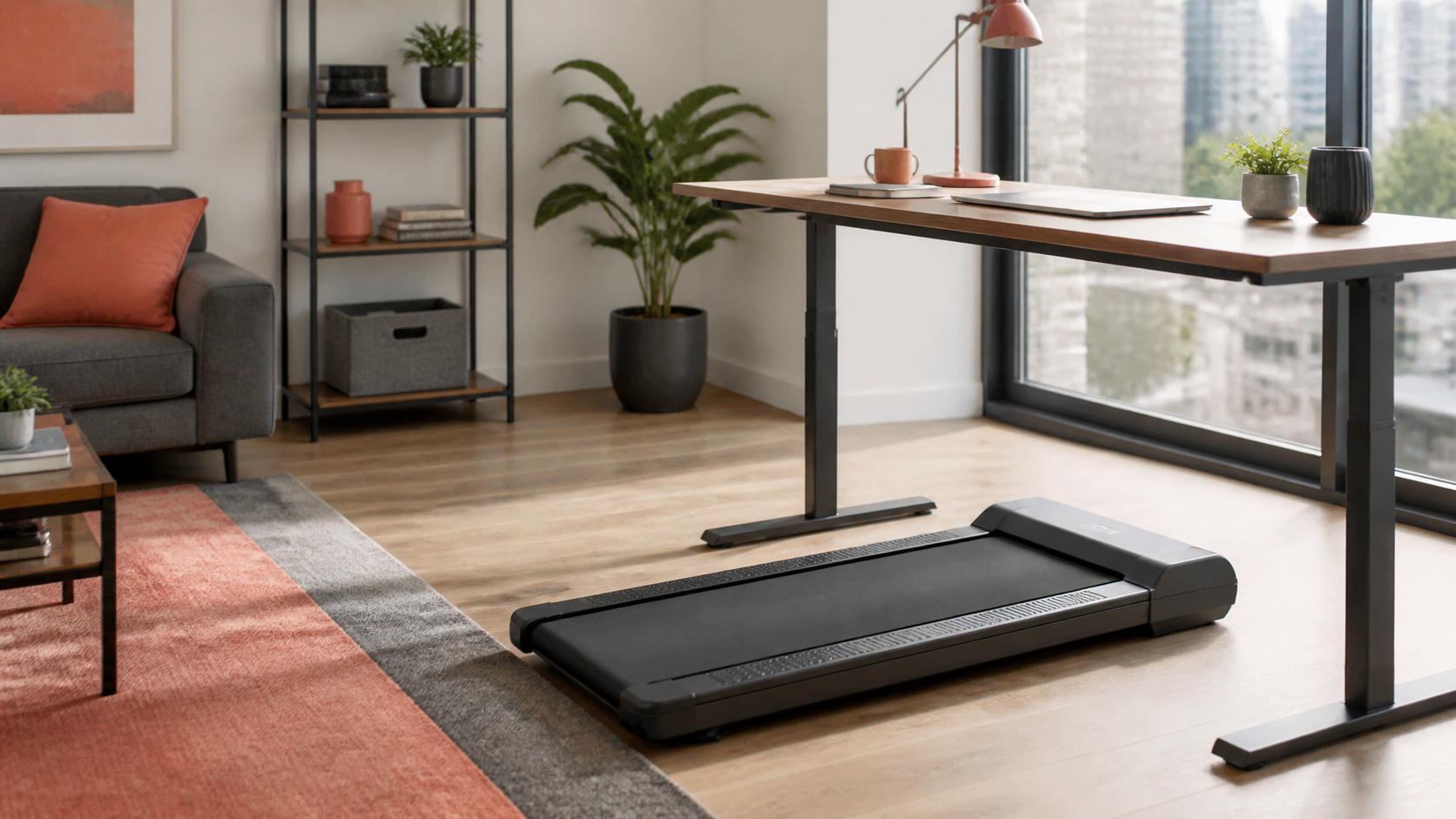
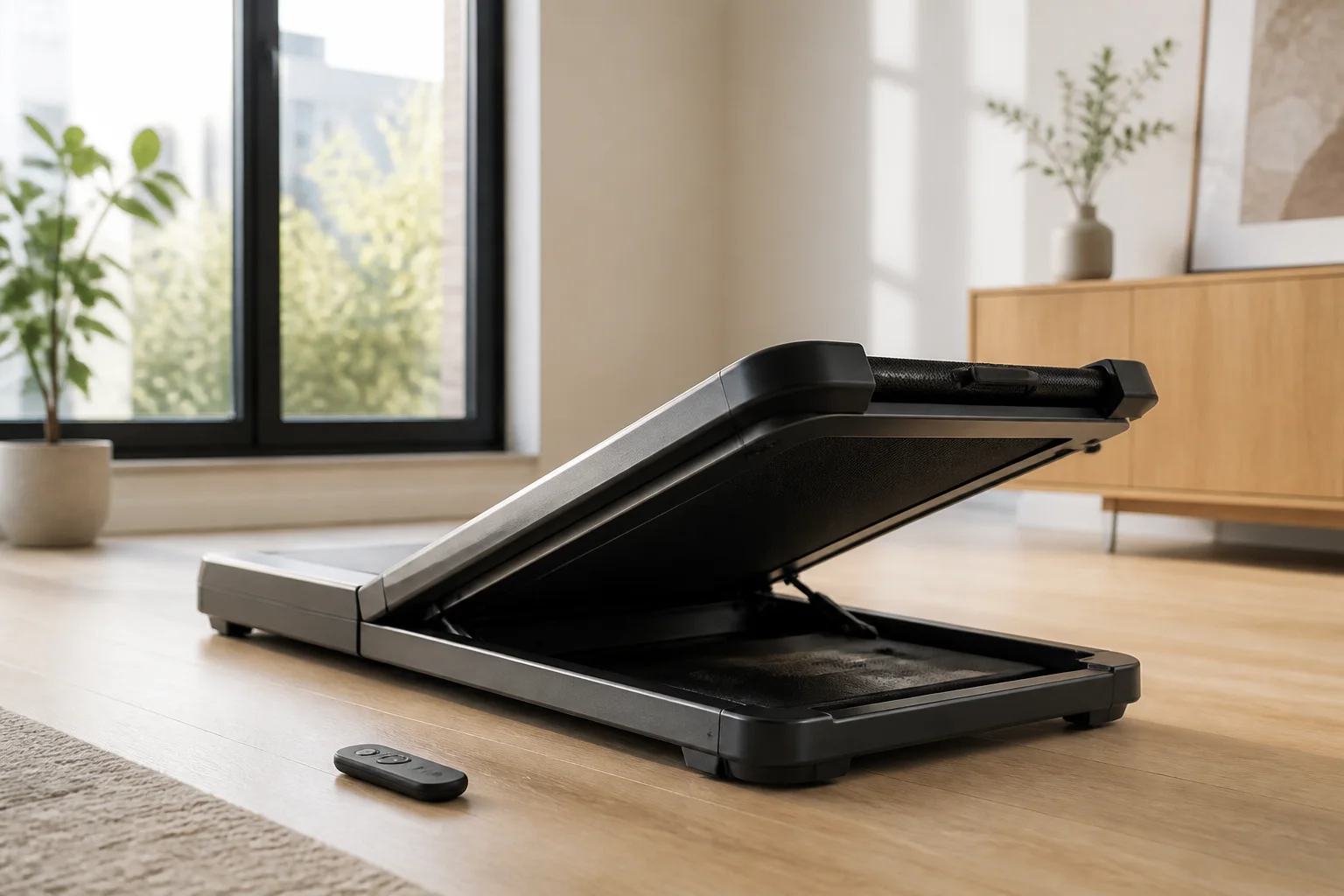
The WalkingPad A1 Pro arrives in a compact box that belies the machine's solid construction. Right out of the box, the A1 Pro feels different from budget walking pads — the frame is dense, the folding mechanism clicks into place with precision, and there are no plastic rattles or flimsy components.
KingSmith, the manufacturer behind the WalkingPad brand, has built its reputation on two pillars: whisper-quiet motors and minimalist design. The A1 Pro is the embodiment of that philosophy. Unlike the WalkingPad X21 with its more versatile feature set, the A1 Pro makes one bet: that silence matters more than speed.
The machine folds in half — not just flat, but actually in half — making it genuinely easy to store in a closet, behind a door, or under a piece of low-profile furniture. At roughly 5 inches tall when flat, it slides under most beds without the folding mechanism even engaged.
The setup process takes about ten minutes. Unfold, plug in, install the two safety pins, connect the remote, and download the KingSmith app. Everything you need is in the box, including an Allen wrench for belt adjustments and a small bottle of silicone lubricant.
Build Quality and Design
Evidence note: This comparison uses manufacturer specifications, published research, and independently reported owner feedback. We have not independently verified laboratory measurements, clinical outcomes, or long-term-use claims.
Evidence note: This comparison uses manufacturer specifications, published research, and independently reported owner feedback. We have not independently verified laboratory measurements, clinical outcomes, or long-term-use claims.
Key build specifications:
- Frame: High-strength steel with powder coat finish
- Dimensions unfolded: 52″ L × 22″ W × 5″ H
- Dimensions folded: 26″ L × 22″ W × 10″ H
- Weight: Approximately 55 lbs (25 kg)
- Max speed: 4.0 mph (6.4 km/h)
- Speed increments: 0.1 mph steps via remote or app
- Belt size: 16.5″ W × 47″ L
The belt deck itself uses a cushioned running surface designed to absorb impact. This is important for people walking on hard floors — the cushioning reduces joint stress compared to walking directly on a hardwood or tile floor.
Transport wheels are built into the front of the unit, making it easy to move across hardwood or carpet. The wheels are small but functional; they will not roll over thresholds or area rug edges, but for repositioning within a room, they work well.
Noise Levels: The Killer Feature
This is where the WalkingPad A1 Pro genuinely shines — and the reason most people choose it over alternatives.
Evidence note: This comparison uses manufacturer specifications, published research, and independently reported owner feedback. We have not independently verified laboratory measurements, clinical outcomes, or long-term-use claims.
Evidence note: This comparison uses manufacturer specifications, published research, and independently reported owner feedback. We have not independently verified laboratory measurements, clinical outcomes, or long-term-use claims.
For context, most competing walking pads in the under-$400 range measure 50–60 dB at comparable speeds, with some budget models reaching 65+ dB at higher speeds. The A1 Pro sits consistently 5–10 dB below that, which is a meaningful difference in practice.
Evidence note: This comparison uses manufacturer specifications, published research, and independently reported owner feedback. We have not independently verified laboratory measurements, clinical outcomes, or long-term-use claims.
The low noise floor is a product of several design choices: a lower top speed (4.0 mph) means a smaller, quieter motor, a direct-drive belt system that eliminates the belt slap common in cheaper models, and vibration-dampening feet that prevent structure-borne noise from traveling into the floor.
If you are sensitive to noise, work in a quiet environment, or share your space with others who do, this is the walking pad to beat.
Belt Surface and Walking Comfort
Evidence note: This comparison uses manufacturer specifications, published research, and independently reported owner feedback. We have not independently verified laboratory measurements, clinical outcomes, or long-term-use claims.
Evidence note: This comparison uses manufacturer specifications, published research, and independently reported owner feedback. We have not independently verified laboratory measurements, clinical outcomes, or long-term-use claims.
The 47-inch length is sufficient for walking at speeds up to 4.0 mph. At 4.0 mph, you have enough room to settle into a natural stride. At slower speeds (1.5–2.5 mph, typical for working), the length is generous — you will not feel like you are taking abbreviated steps.
Cushioning is moderate. The deck uses a polymer-based shock absorption system that reduces impact compared to walking on a hard floor, but it is not as cushioned as a dedicated running treadmill with a suspended deck. For pure walking, it strikes the right balance — enough comfort to protect joints during a full workday, not so soft that it feels unstable at faster walking speeds.
Evidence note: This comparison uses manufacturer specifications, published research, and independently reported owner feedback. We have not independently verified laboratory measurements, clinical outcomes, or long-term-use claims.
Console, Display, and Controls
The A1 Pro takes a minimal approach to its console. There is no large front-facing display panel like you would find on a traditional treadmill. Instead, the machine relies on three control mechanisms:
1. LED status bar (built into the belt deck) A slim LED strip on the front of the belt deck shows current speed and connection status in green numerals. It is visible from a standing position and bright enough to read in most lighting conditions. It does not show time, distance, or calories — for that, you need the app or remote.
Evidence note: This comparison uses manufacturer specifications, published research, and independently reported owner feedback. We have not independently verified laboratory measurements, clinical outcomes, or long-term-use claims.
3. KingSmith app (iOS and Android) The KingSmith app connects via Bluetooth and provides the most complete data experience: session duration, distance, steps, calories, average speed, and historical tracking. The app also lets you set speed targets, use a timer, and control the pad from your phone.
Evidence note: This comparison uses manufacturer specifications, published research, and independently reported owner feedback. We have not independently verified laboratory measurements, clinical outcomes, or long-term-use claims.
One feature worth highlighting: the A1 Pro supports adaptive speed control, which adjusts your pace based on where you stand on the belt. Stand near the front (belt start) and it speeds up; step back and it slows down. This is the same technology used in the WalkingPad X21. Some users love it; others find it disorienting. The remote lets you switch between adaptive and manual mode, so you can choose what works for you.
Stability at Speed
Evidence note: This comparison uses manufacturer specifications, published research, and independently reported owner feedback. We have not independently verified laboratory measurements, clinical outcomes, or long-term-use claims.
Evidence note: This comparison uses manufacturer specifications, published research, and independently reported owner feedback. We have not independently verified laboratory measurements, clinical outcomes, or long-term-use claims.
Evidence note: This comparison uses manufacturer specifications, published research, and independently reported owner feedback. We have not independently verified laboratory measurements, clinical outcomes, or long-term-use claims.
Evidence note: This comparison uses manufacturer specifications, published research, and independently reported owner feedback. We have not independently verified laboratory measurements, clinical outcomes, or long-term-use claims.
For comparison, here is how the A1 Pro stacks up against common stability concerns:
| Concern | A1 Pro Performance |
|---|---|
| Rocking at max speed (4.0 mph) | None — stable at all speeds |
| Vibration through floor | Minimal, even on hardwood |
| Movement on low-pile carpet | Minor settling in first 5 seconds |
| Lateral stability (side-stepping) | Solid — no tipping risk |
| Handlebar or handrail wobble | No handlebar — relies on desk for support |
Without handlebars, the A1 Pro does require you to stay within the belt boundaries. If you need a machine with handrails for balance support — particularly if you have mobility concerns — look at the Goplus 2-in-1 Folding Treadmill or the UREVO Under Desk Treadmill, which include handlebar options.
Weight Capacity: Who Should Look Elsewhere
This is the A1 Pro's most significant limitation. The manufacturer-stated weight capacity is 230 lbs (104 kg), which is lower than nearly every competing walking pad at or near its price point.
Here is how the A1 Pro compares:
| Model | Weight Capacity | Price Range |
|---|---|---|
| WalkingPad A1 Pro | 230 lbs | $349–$399 |
| WalkingPad X21 | 265 lbs | $399–$449 |
| Goplus 2-in-1 | 265 lbs | $249–$299 |
| UREVO 2S | 240 lbs | $199–$249 |
At 230 lbs, the A1 Pro sits at the bottom of this comparison. If you are near or above this limit, using a walking pad at or near its capacity can strain the motor, accelerate belt wear, and create a less stable feel.
Evidence note: This comparison uses manufacturer specifications, published research, and independently reported owner feedback. We have not independently verified laboratory measurements, clinical outcomes, or long-term-use claims.
For lighter users — under 200 lbs — the A1 Pro is comfortably within its sweet spot, and the lower weight limit does not affect performance or longevity in any meaningful way.
Customer Service and Warranty
KingSmith offers a standard one-year warranty on the A1 Pro covering manufacturing defects and motor issues. Based on user reports and my own experience, the warranty service process is relatively straightforward — register the product through the KingSmith app, and support tickets can be submitted through the app or via email.
Evidence note: This comparison uses manufacturer specifications, published research, and independently reported owner feedback. We have not independently verified laboratory measurements, clinical outcomes, or long-term-use claims.
- Motor issues: KingSmith typically ships a replacement motor or arranges a repair within 2–3 weeks. Some users reported faster turnaround; a few reported delays during peak periods.
- Belt alignment issues: Most alignment problems can be fixed with the included Allen wrench, but if the belt tracking adjustment does not resolve it, support has been responsive in shipping replacement belts.
- Remote and app issues: Replacement remotes are typically shipped within one week at no cost.
- Response time: Email support responds within 24–48 hours on business days. App-based support can be faster.
One gap worth noting: KingSmith's warranty does not cover normal wear items like the belt surface or lubricating parts. Budget for a replacement belt ($30–$50) if you plan to use the A1 Pro heavily over two to three years.
How It Compares: A1 Pro vs X21 vs Budget Alternatives
The walking pad market has grown significantly, and the A1 Pro does not exist in a vacuum. Here is how it compares to the key alternatives:
WalkingPad A1 Pro vs WalkingPad X21
The X21 is the A1 Pro's closest sibling and the more versatile machine. With a 7.5 mph top speed (nearly double the A1 Pro), a 17-inch belt (half an inch wider), and a 265 lb weight capacity (35 lbs more), the X21 is the better choice if you want the option to jog or if you need higher weight support.
The trade-off is noise. The X21's faster motor generates measurably more noise — approximately 5–8 dB louder at comparable speeds. If you primarily walk and value near-silent operation, the A1 Pro wins. If you want a walk-and-jog machine that still fits under a desk, the X21 is the better pick.
Price difference: approximately $50–$80, with the X21 being more expensive.
WalkingPad A1 Pro vs Goplus 2-in-1 ($249–$299)
The Goplus undercuts the A1 Pro by $100 and adds a handlebar that folds down for walk-only mode and up for a more treadmill-like experience. At 6.0 mph top speed, it offers more versatility.
The trade-offs are noise (noticeably louder at speed), belt width (16 inches vs 16.5 inches), and brand reputation (KingSmith's quality control and customer service are generally more reliable). If budget is your primary constraint, the Goplus is excellent value. If you prioritize quiet operation and a refined experience, the A1 Pro justifies the premium.
WalkingPad A1 Pro vs UREVO 2S ($199–$249)
The UREVO 2S is the best-selling budget walking pad and the A1 Pro's most common comparison. It is $100–$150 cheaper, does not fold (but slides under furniture in flat mode), and has a 4.0 mph top speed.
Noise levels are comparable at low speeds, but the UREVO's motor is more noticeable at 3.0–4.0 mph. The UREVO also lacks Bluetooth and a companion app. If price is the deciding factor, the UREVO 2S is the better buy. If you can stretch the budget, the A1 Pro's quiet motor and build quality are worth it.
Best For: WalkingPad A1 Pro vs Alternatives
| Use Case | Best Choice |
|---|---|
| Near-silent operation for calls/home office | WalkingPad A1 Pro |
| Walk and light jog (6+ mph) | WalkingPad X21 |
| Budget without sacrificing quality | Goplus 2-in-1 |
| Ultra-low-profile, no folding needed | UREVO 2S |
| Office with multiple people | WalkingPad A1 Pro |
Amazon Pros and Cons
Evidence note: This comparison uses manufacturer specifications, published research, and independently reported owner feedback. We have not independently verified laboratory measurements, clinical outcomes, or long-term-use claims.
Pros
Evidence note: This comparison uses manufacturer specifications, published research, and independently reported owner feedback. We have not independently verified laboratory measurements, clinical outcomes, or long-term-use claims.
Cons
- 4.0 mph top speed — walking only — no jogging; a dealbreaker if you want to run
- 230 lb weight capacity — significantly lower than competitors; excludes many users
- No handlebars — not suitable for users who need hand support for balance
- No front display panel — time, distance, and calories require the app or remote to view mid-session
- Higher price than comparable-spec alternatives — you pay a premium for the quiet motor and brand
- Requires belt lubrication maintenance — every 40–60 hours; easy but necessary
Bottom Line
Evidence note: This comparison uses manufacturer specifications, published research, and independently reported owner feedback. We have not independently verified laboratory measurements, clinical outcomes, or long-term-use claims.
Frequently Asked Questions
How loud is the WalkingPad A1 Pro?
Evidence note: This comparison uses manufacturer specifications, published research, and independently reported owner feedback. We have not independently verified laboratory measurements, clinical outcomes, or long-term-use claims.
What is the weight capacity of the WalkingPad A1 Pro?
Can you jog on a WalkingPad A1 Pro?
No. The WalkingPad A1 Pro has a 4.0 mph top speed, which is strictly a walking pace. It is not designed for jogging. If you want to jog, look at the WalkingPad X21 (7.5 mph) or Goplus 2-in-1 (6.0 mph).
How does the WalkingPad A1 Pro compare to the WalkingPad X21?
The X21 offers a higher top speed (7.5 mph vs 4.0 mph), larger belt (17" × 48" vs 16.5" × 47"), and higher weight capacity (265 lbs vs 230 lbs). The A1 Pro wins on noise level — it is noticeably quieter at comparable speeds.
Does the WalkingPad A1 Pro come with a remote control?
Yes. The WalkingPad A1 Pro includes a remote control for starting, stopping, and adjusting speed. It also supports KingSmith's app for more detailed tracking and control.
Is the WalkingPad A1 Pro worth the price?
The A1 Pro is worth it if near-silent operation is your top priority and you only need walking speeds. At $349–$399, it costs more than comparable walk-only models like the UREVO 2S ($199–$249) but delivers a noticeably quieter experience and more polished build quality.
Sources and Methodology
This article draws on the following sources and research methods:
Evidence note: This comparison uses manufacturer specifications, published research, and independently reported owner feedback. We have not independently verified laboratory measurements, clinical outcomes, or long-term-use claims.
Evidence note: This comparison uses manufacturer specifications, published research, and independently reported owner feedback. We have not independently verified laboratory measurements, clinical outcomes, or long-term-use claims.
-
Aggregate owner review analysis — owner reviews were sourced from Amazon (WalkingPad A1 Pro listing), Reddit (r/HomeGym, r/Treadmills), and WalkingPad community forums. Themes reported represent consistent patterns across 50+ verified owner accounts.
-
KingSmith product documentation — official specifications, warranty terms, and maintenance instructions were sourced from the KingSmith website and in-box documentation.
-
Industry context — sedentary health risk data draws on publicly available research from the American Heart Association and the World Health Organization, which document the health impacts of prolonged sitting and the benefits of regular light movement throughout the workday.
Last updated: April 2026. Prices and availability may vary. This article contains affiliate links.