Best Folding Walking Pad for Easy Storage (2026)
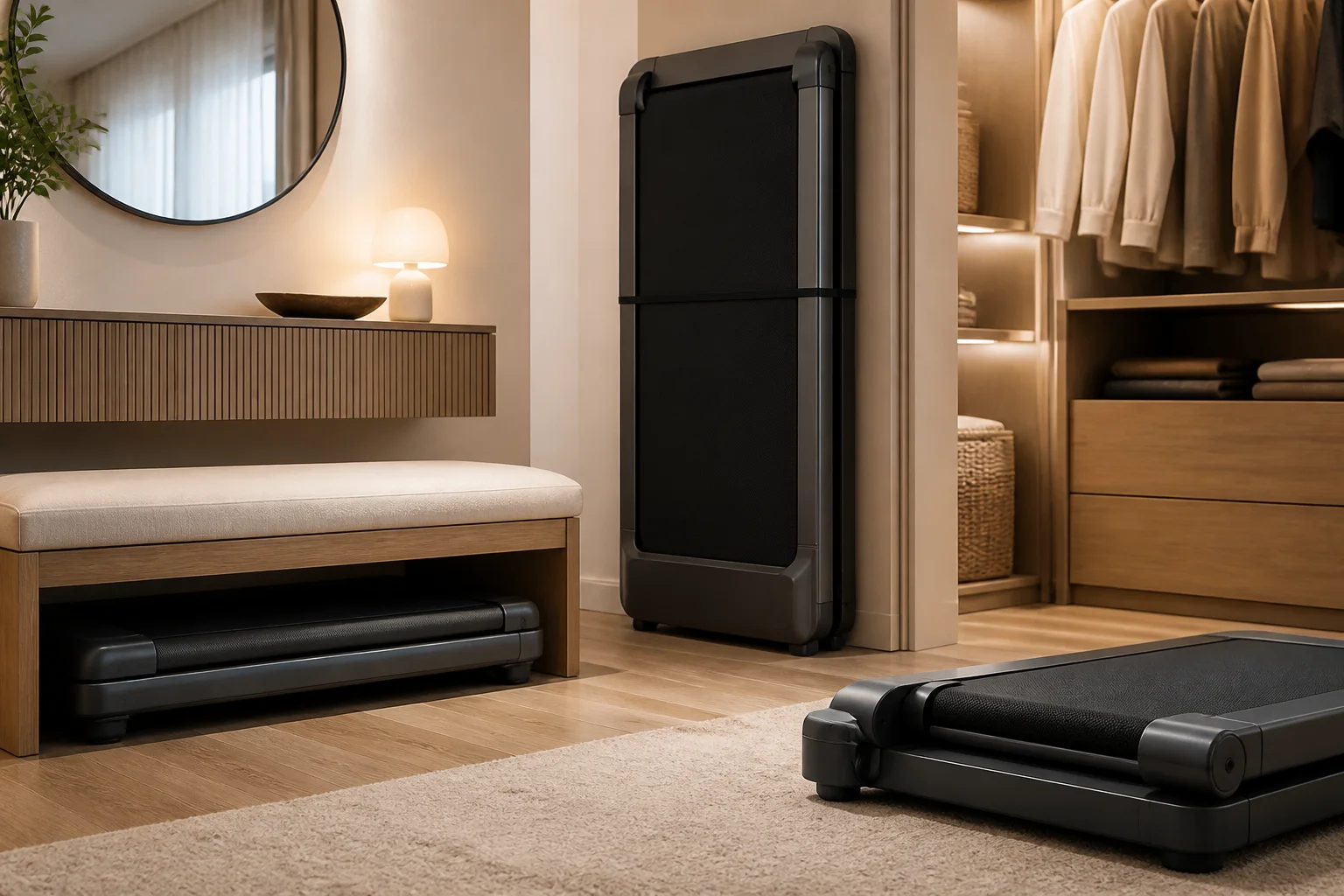
Current product-safety notice: CPSC warned consumers on April 16, 2026 to stop using specified Sperax Pro, Q1, RM-01 and RM-02 walking pads and treadmills. We removed older recommendations and shopping links for that brand while exact models are re-audited. Check the official CPSC warning and follow its stop-use instructions.
The best folding walking pads in 2026 fold in half in under 10 seconds, collapse to fit under a bed, sofa, or behind a closet door, and weigh 35–55 lbs so one person can move and store them without help.
By James Whitfield, Fitness Equipment Reviewer | Last updated: March 26, 2026
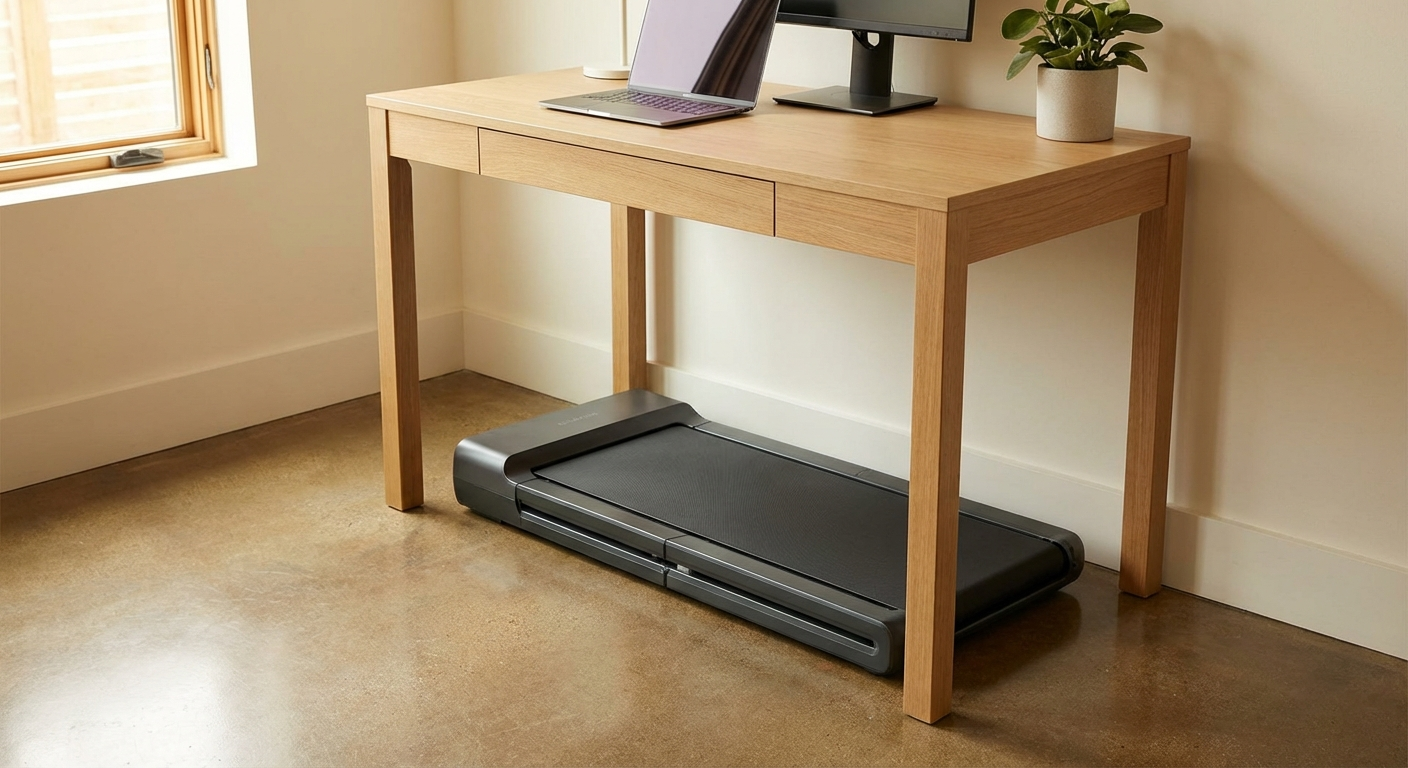
 Hero visual for this section
Table of Contents
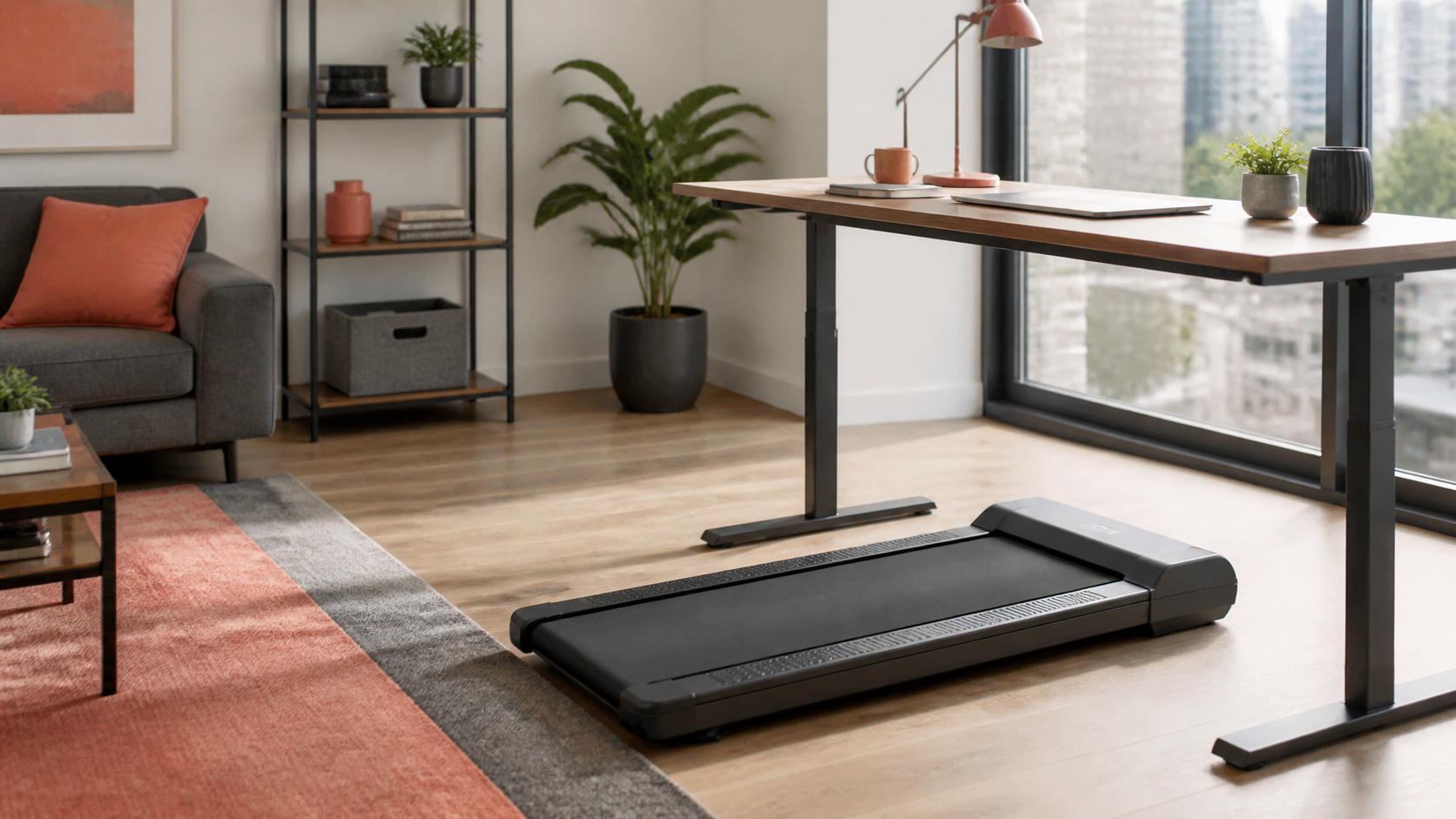 Comparison visual for Table of Contents
- Why Storage Is the Most Overlooked Walking Pad Feature
- What Makes a Walking Pad Genuinely Easy to Store
- Top 5 Folding Walking Pads at a Glance
- WalkingPad C2 Review
- UREVO Foldi Mini Review
- Goplus 2-in-1 Folding Treadmill Review
- Mobvoi Home Treadmill 1S Review
- How to Choose the Right Folding Walking Pad
- Storage Tips: Getting the Most Out of a Small Space
- Frequently Asked Questions
- Sources and Methodology
Why Storage Is the Most Overlooked Walking Pad Feature
Infographic visual for Why Storage Is the Most Overlooked Walking Pad Feature {#why-storage-matters}
Most walking pad buying guides lead with speed, motor power, and price. Storage almost always lands at the bottom of the spec table, if it shows up at all. That's backwards for a large percentage of buyers.
Here's the reality: a walking pad you can't store conveniently is a walking pad you stop using. It becomes a $300 clothes rack. It blocks the hallway. It creates friction every single time you want to exercise — and friction kills habits.
The research on habit formation is consistent on this point. As Fogg (2019) documents in Tiny Habits, behavioral scientists studying exercise adherence consistently find that environmental friction is one of the leading causes of abandoned routines. If using your walking pad requires moving three things, unfolding a mechanism, and navigating around a half-stored machine in the bedroom doorway, you're going to take the path of least resistance and skip the walk.
Reducing that friction starts with choosing a machine that actually disappears when you don't need it. A good folding walking pad should require fewer than 15 seconds of physical effort to store and retrieve. If it takes longer than that, you're likely to stop bothering.
This is especially true for people in apartments, shared living spaces, or home offices that double as bedrooms. You don't want your fitness equipment visible 24/7. You want to walk your 5,000 steps during the workday and then slide the machine out of sight until tomorrow.
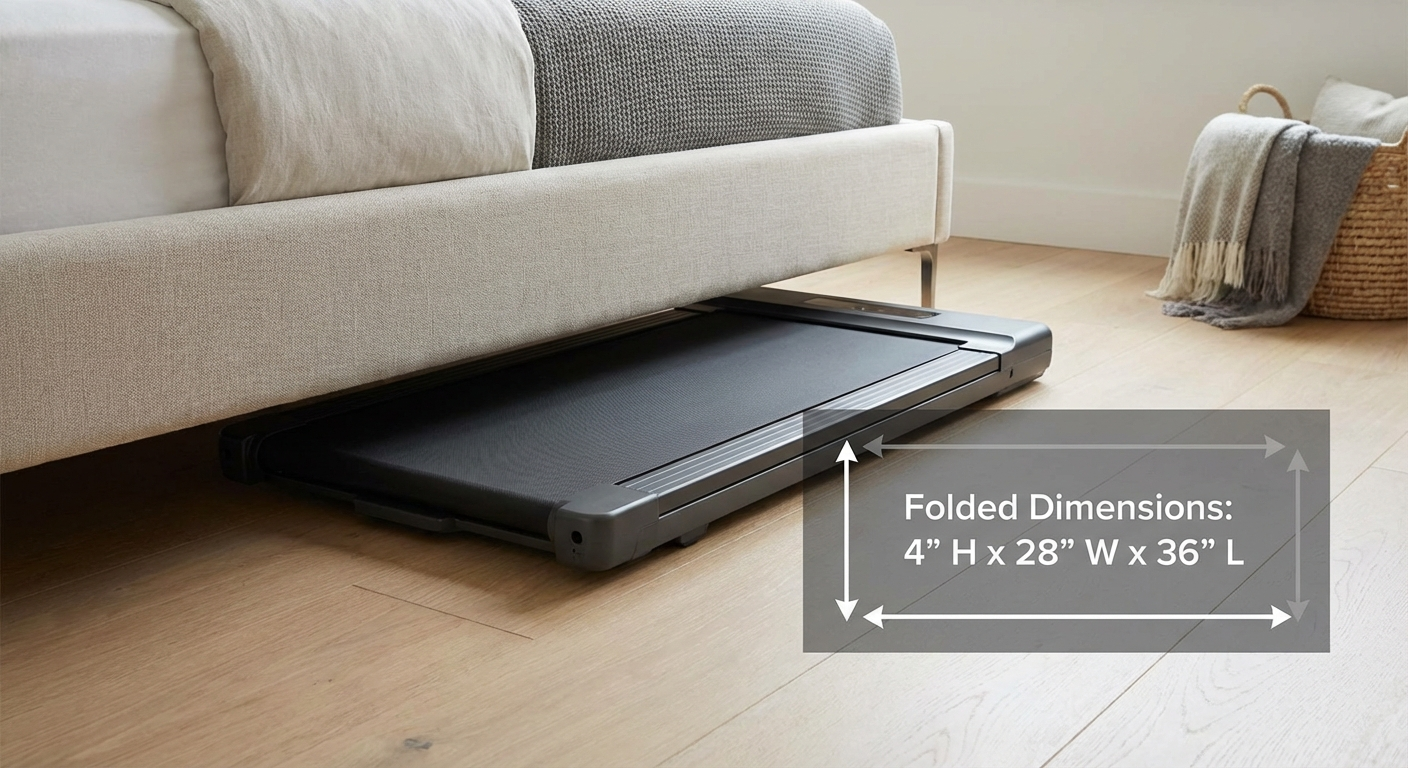
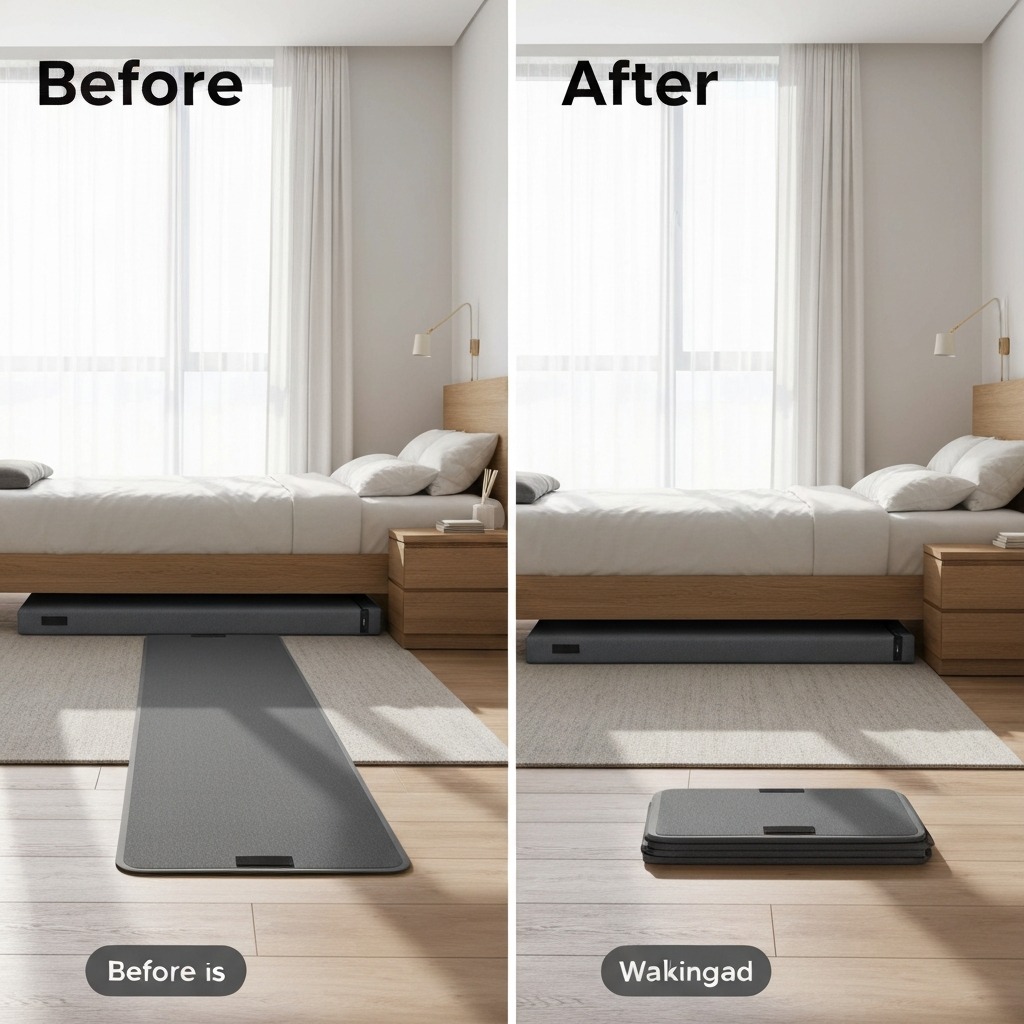
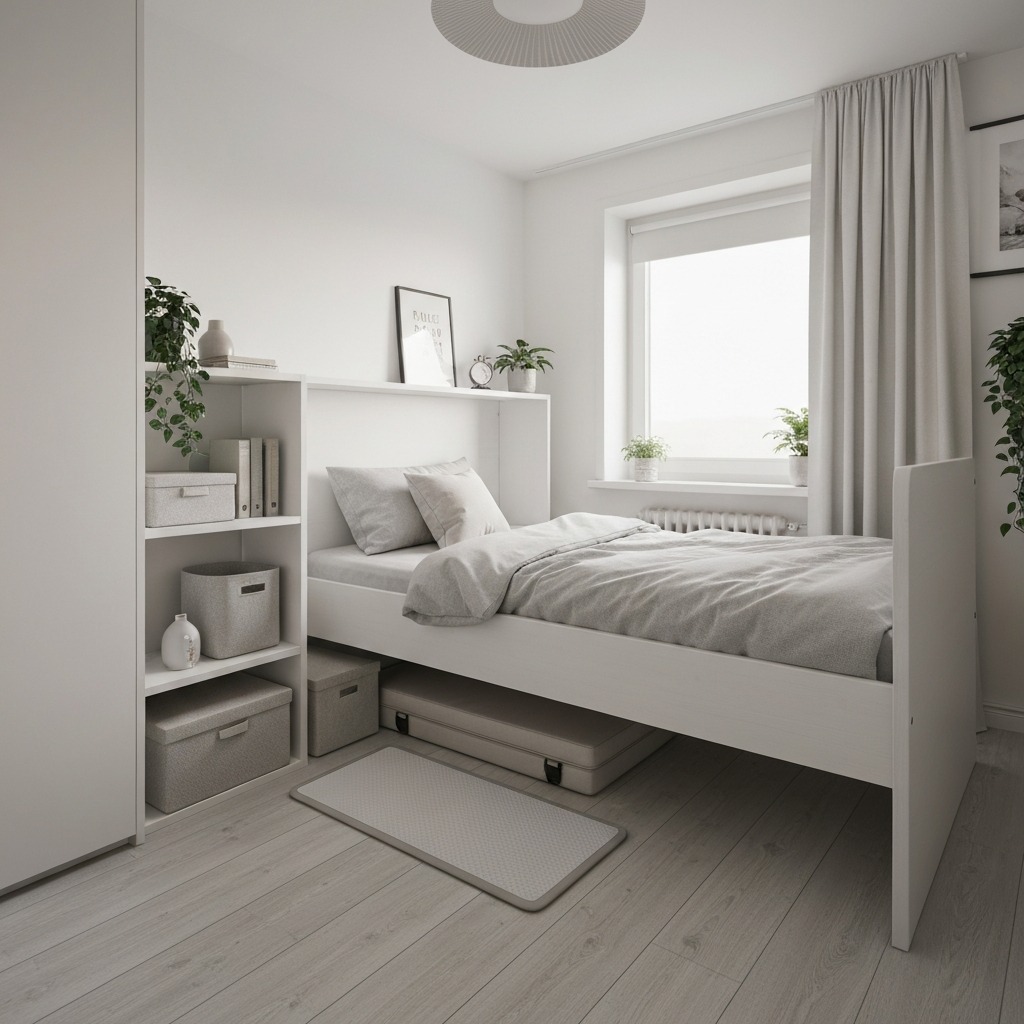
A folding walking pad stored under a standard platform bed — the most common and practical storage solution for apartment dwellers.
The five models in this guide were selected specifically for their storage credentials. That means fold dimensions, folded weight, ease of the folding mechanism, and whether transport wheels make solo repositioning realistic. Performance matters too — but we didn't include any model we wouldn't also recommend on its walking merits.
What Makes a Walking Pad Genuinely Easy to Store
Setup visual for What Makes a Walking Pad Genuinely Easy to Store {#what-makes-easy-storage}
Not all "foldable" walking pads are created equal. Before I get to the specific product reviews, here are the criteria that separate a genuinely storage-friendly machine from one that just technically folds.
Folded Dimensions
The key measurement is folded length. Most walking pads, when unfolded, run 55–65 inches long — too long to fit in a standard closet without sticking out. When folded in half, the best compact models reduce that to 28–33 inches, which fits easily under a bed with 10+ inches of clearance, stands upright in a closet, or slides behind a sofa.
Folded height (how tall the unit stands when stored upright) matters if you're planning closet storage. Most folded walking pads stand 20–24 inches tall — about the height of a carry-on suitcase.
Machine Weight and Transport Wheels
Folding a machine doesn't help much if it weighs 65 lbs and you can't move it solo. The best folding walking pads for easy storage weigh 35–50 lbs and include integrated transport wheels on the frame. Those wheels let you tilt the folded machine and roll it on two wheels — like a dolly — rather than lifting the full weight.
If a model lacks transport wheels, moving it from the living room to the bedroom is a two-person job. That's friction you don't need.
The Folding Mechanism Itself
Smooth and tool-free is non-negotiable. A walking pad that requires you to squeeze a latch with one hand, lift with the other, and then kick a locking pin into place with your foot is not a machine you'll fold consistently.
The best mechanisms are single-action: lift the front end of the deck and it folds cleanly, locking itself at the midpoint. Unfolding is just as fast. This simplicity matters more than it sounds when you're doing it twice a day.
Surface Clearance for Under-Furniture Storage
If you're planning to store under a bed or sofa, confirm the exact folded height before buying. Many beds, especially platform beds without a box spring, have 8–11 inches of clearance. Most folded walking pads sit 5–7 inches tall when laid flat (not stood upright) — check that your specific bed clears the machine by at least 1–2 inches with some room to slide it in and out without scraping.
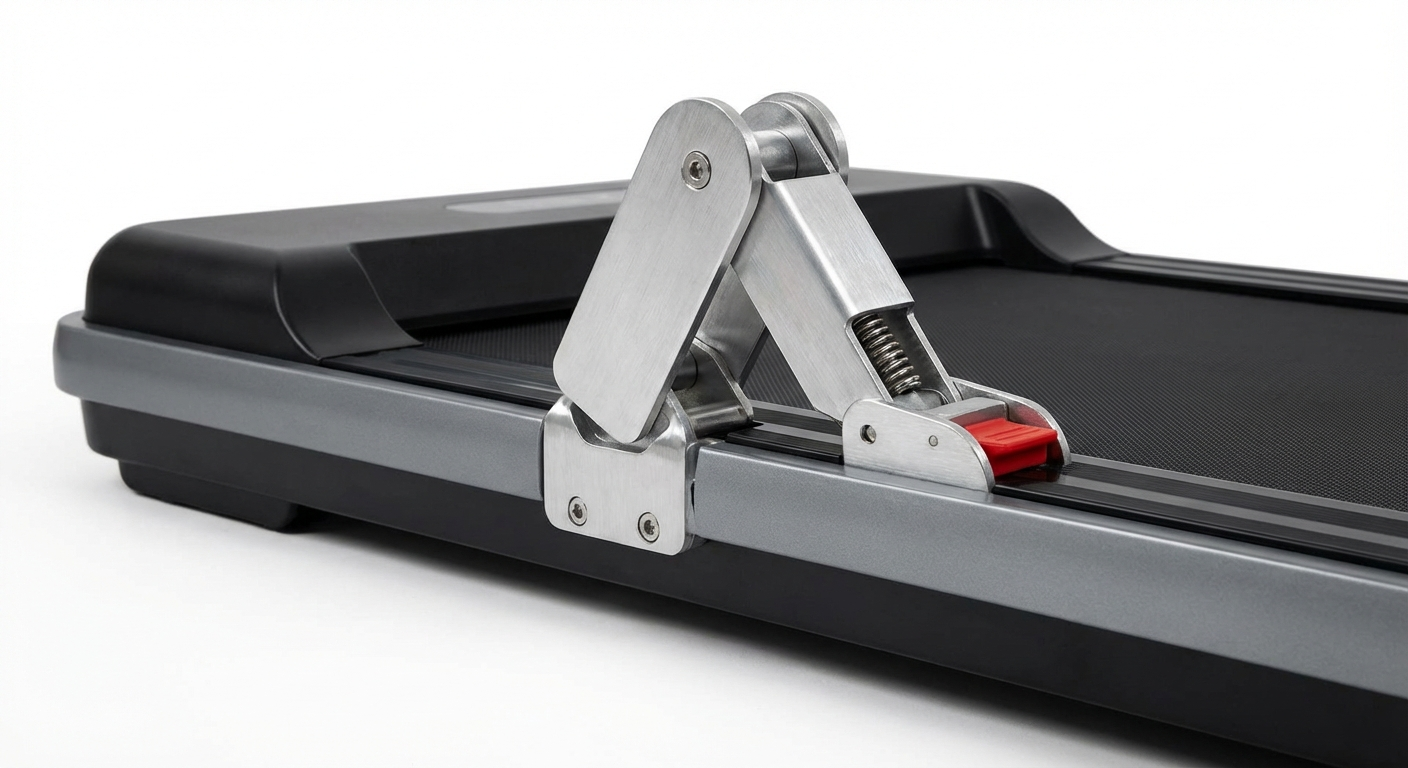
The fold mechanism quality determines whether you'll actually use it. Look for single-action latches with no tools required.
Top 5 Folding Walking Pads at a Glance
Detail visual for Top 5 Folding Walking Pads at a Glance {#top-5-comparison-table}
Prices are approximate as of March 2026. Always verify on Amazon before purchasing.
Folding and unfolding a walking pad in under 10 seconds — what to expect from the top models in this guide.
1. WalkingPad C2 — Best Overall Folding Walking Pad
Lifestyle visual for 1. WalkingPad C2 — Best Overall Folding Walking Pad {#walkingpad-c2-review}
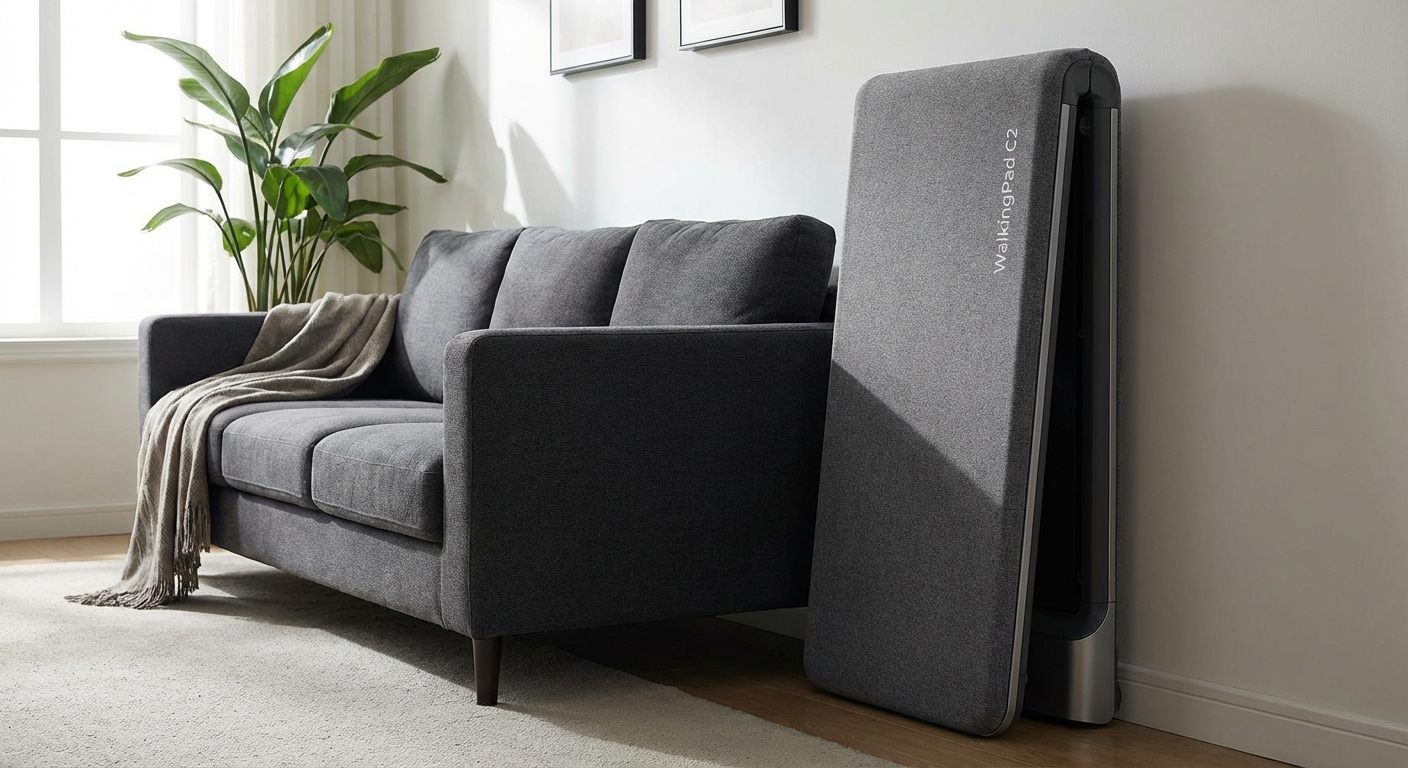
The WalkingPad C2 is the benchmark for folding walking pads. It's been refined over multiple generations, and the 2025–2026 version shows it: the fold mechanism is among the smoothest on the market, the build quality feels premium without the premium weight, and the dual-mode operation (auto-sensing speed vs. app-controlled) suits a wider range of users than most competitors.
Key Specs
- Folded dimensions: 32 × 21 × 5 inches
- Unfolded dimensions: 56 × 21 × 5 inches
- Weight: 48 lbs (transport wheels included)
- Motor: 1.5 HP continuous / 2.25 HP peak
- Speed range: 0.5–3.7 mph
- Weight capacity: 220 lbs
- Belt size: 16 × 40 inches
- Noise level: ~40 dB at walking speed
What Makes It Great for Storage
The C2's fold is genuinely one-motion: grip the handle at the front, lift, and the deck folds cleanly. The magnetic locking system clicks it into the folded position automatically — no latches to fumble with. Two integrated transport wheels at the rear mean you can tilt and roll the folded machine on just two fingers of effort.
At 5 inches folded height, it slides under most platform beds and many sofas. If your bed clearance is 7+ inches, you're fine.
Where It Falls Short
The 220 lb weight capacity is the C2's main limitation. Larger users will need to look elsewhere. The 3.7 mph speed cap also means this is a walking-only machine — there's no pretending otherwise. If you want the option to jog, the Goplus 2-in-1 is the better choice.
The price point (~$399) is also the highest on this list for a walking-only machine. You're paying for the WalkingPad brand refinement and the quality of the fold mechanism.
Who It's For
The C2 is the right choice if you want the best fold-and-store experience available and you're under 220 lbs. The build quality, the fold polish, and the compact profile make it the top-tier option for apartment dwellers who walk at desk speeds.
→ Check the WalkingPad C2 price on Amazon
2. UREVO Foldi Mini — Best Value Folding Walking Pad
Product Lineup visual for 2. UREVO Foldi Mini — Best Value Folding Walking Pad {#urevo-foldi-mini-review}
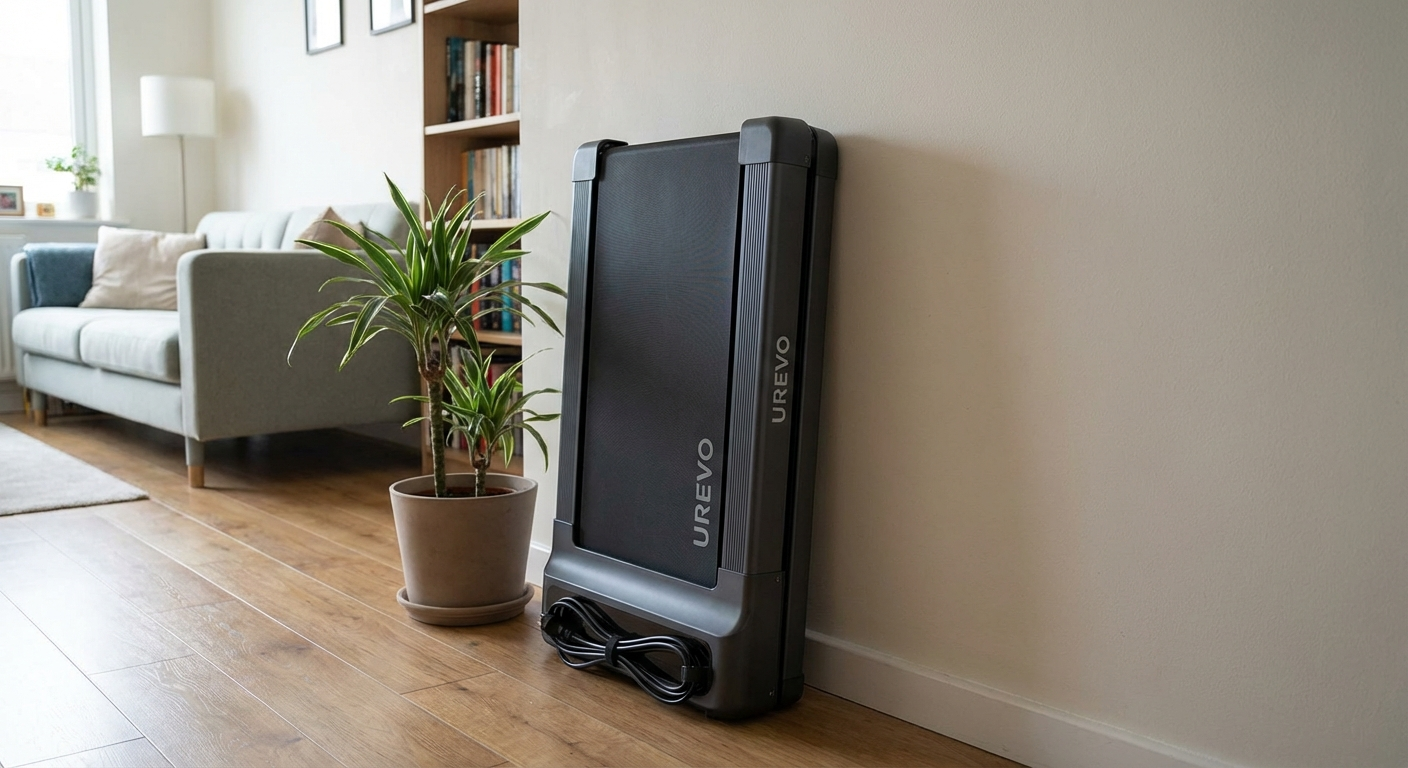
The UREVO Foldi Mini earns its name. It is genuinely one of the smallest folding walking pads you can buy, and it comes in at roughly $100–$130 less than the WalkingPad C2 while supporting a higher weight capacity. For budget-conscious buyers who don't want to compromise on storage, it's the strongest value proposition in the 2026 market.
Key Specs
- Folded dimensions: 31 × 20 × 6 inches
- Unfolded dimensions: 55 × 20 × 6 inches
- Weight: 44 lbs (transport wheels included)
- Motor: 2.0 HP peak
- Speed range: 0.5–3.8 mph
- Weight capacity: 265 lbs
- Belt size: 15.4 × 40 inches
- Noise level: ~45 dB at walking speed
What Makes It Great for Storage
At 44 lbs and 31 inches folded, the Foldi Mini is the lightest and most compact option on this list. The shorter fold length is particularly useful if your under-bed clearance is adequate but your access gap is narrow — less machine to wrestle in and out. Transport wheels are included, and they work well on both hardwood and low-pile carpet.
The 265 lb weight capacity is a pleasant surprise at this price point. Most sub-$300 walking pads cut corners on weight capacity; the Foldi Mini doesn't.
Where It Falls Short
The belt is slightly narrower than the C2 at 15.4 inches. Taller users or those with a wider natural stride may notice the difference during longer sessions. The app connectivity is basic and the companion app receives mixed reviews for reliability.
Build quality is good for the price but doesn't match the WalkingPad C2's feel. The fold mechanism requires slightly more force to engage and is not quite as polished.
Who It's For
The UREVO Foldi Mini is the right choice if you're under $300, need to support up to 265 lbs, and want the smallest folded footprint possible. It's particularly good for users storing under a low-clearance sofa where every inch matters.
→ Check the UREVO Foldi Mini price on Amazon
3. Goplus 2-in-1 Folding Treadmill — Best for Versatility
 Tips visual for 3. Goplus 2-in-1 Folding Treadmill — Best for Versatility {#goplus-2in1-review}
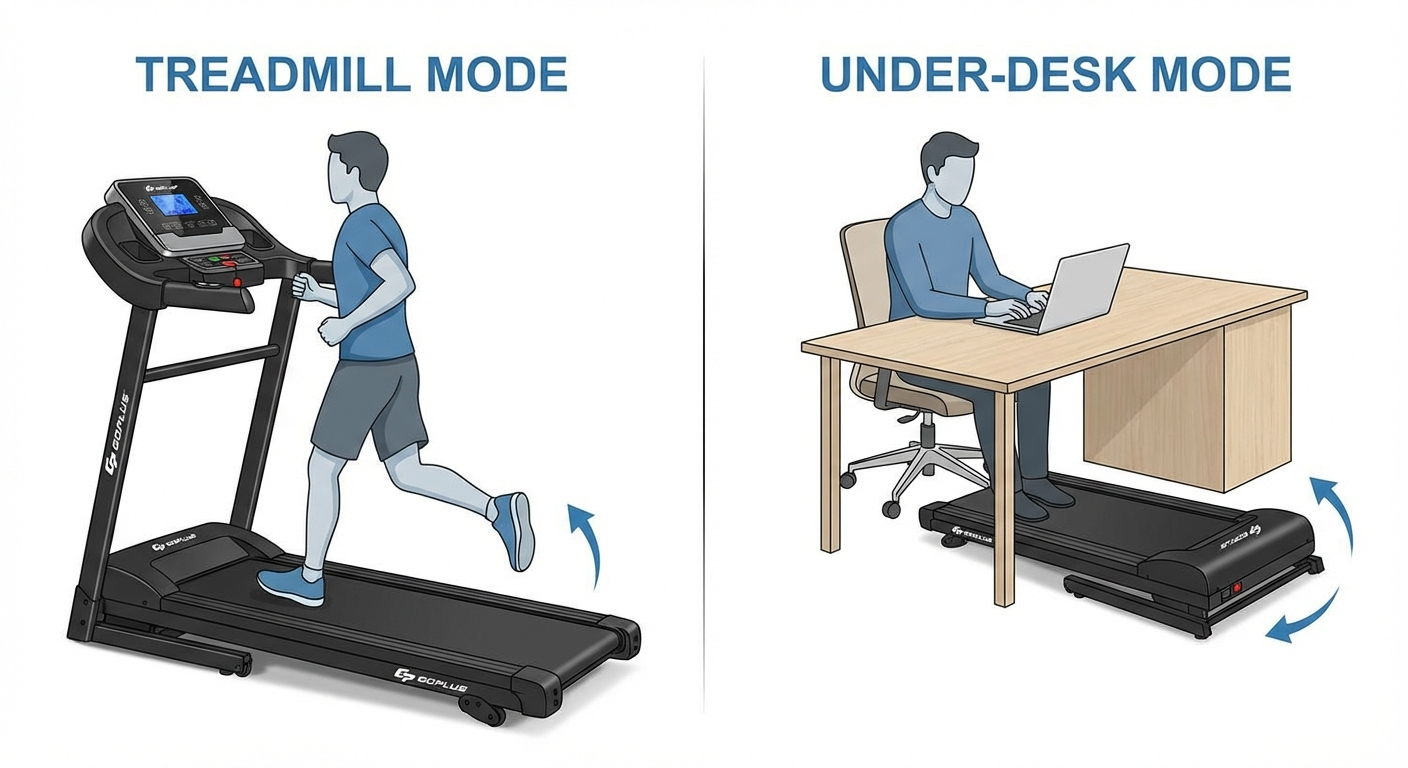
The Goplus 2-in-1 is the only machine on this list that converts between a desk walking mode (no handlebar, flat profile) and a traditional treadmill mode (handlebar up, speeds to 7.5 mph). If you want one machine that handles both your daytime desk walking and your evening cardio sessions, this is the most storage-efficient way to get there.
Key Specs
- Folded dimensions: 34 × 22 × 6 inches (handlebar folded, deck folded)
- Unfolded dimensions: 56 × 22 × 6 inches (desk mode, flat)
- Weight: 55 lbs (transport wheels included)
- Motor: 2.25 HP continuous / 3.0 HP peak
- Speed range: 0.5–7.5 mph (walking mode: 0.5–4 mph)
- Weight capacity: 265 lbs
- Belt size: 16.5 × 40 inches
- Noise level: ~48 dB at walking speed, ~62 dB at jogging speed
What Makes It Great for Storage
The 2-in-1 design means the handlebar folds down flat against the machine before you fold the deck itself. In fully stored configuration, it's not dramatically larger than the walking-only models on this list — the folded length is 34 inches vs. 31–33 for the others.
It's heavier at 55 lbs, but the transport wheels are robust enough to make solo handling realistic. The 2-in-1 configuration also means you're not buying two separate machines — a meaningful space and cost saving.
Where It Falls Short
The higher weight makes it the least nimble machine on the list. If you're moving it between rooms daily or lifting it into overhead closet storage, the extra 7–11 lbs compared to the Foldi Mini adds up. The higher speed capability also means the motor is larger and slightly noisier at walking speeds.
The folding sequence is also more complex than a pure walking pad: fold the handlebar first, then fold the deck. Two steps instead of one.
Who It's For
The Goplus 2-in-1 suits users who genuinely want the option to use the machine for more than walking. If you walk at 2 mph during your morning work hours and want to use the same machine for a light jog in the evening, this is the most storage-efficient way to do both.
→ Check the Goplus 2-in-1 price on Amazon
4. Mobvoi Home Treadmill 1S — Best Aesthetics and App Integration
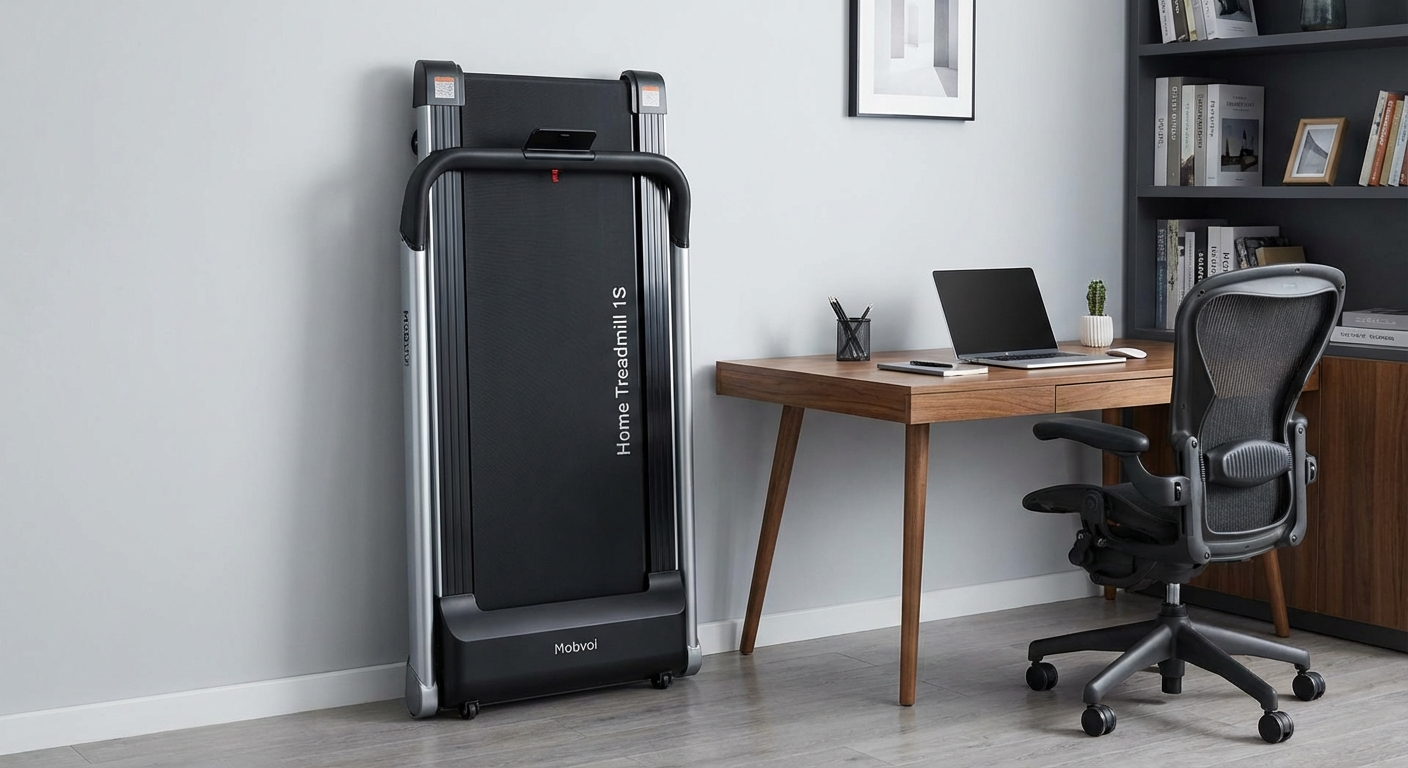
The Mobvoi Home Treadmill 1S is what happens when a tech company designs a walking pad. The build is cleaner than most competitors, the companion app (TicExercise) is more polished than anything else on this list, and the LED ambient lighting strip — subtle but distinctive — gives it a premium look that doesn't scream "fitness equipment" when it's folded in the corner.
Key Specs
- Folded dimensions: 33 × 21 × 5.5 inches
- Unfolded dimensions: 57 × 21 × 5.5 inches
- Weight: 51 lbs (transport wheels included)
- Motor: 2.0 HP continuous / 2.5 HP peak
- Speed range: 0.5–3.7 mph
- Weight capacity: 220 lbs
- Belt size: 16 × 41 inches
- Noise level: ~42 dB at walking speed
What Makes It Great for Storage
The Mobvoi folds cleanly and quietly — the mechanism has less metallic clunk than many competitors. The relatively slim 5.5-inch folded height handles most under-bed storage scenarios. The aesthetic is important here too: when stored upright in a corner, this machine looks less like gym equipment and more like a modern household object. For apartment dwellers where the walking pad may be stored in a living area, that matters.
Where It Falls Short
The 220 lb weight capacity matches the WalkingPad C2's limitation. The price (~$449) is the highest on this list and higher than the C2 for similar walking-only performance.
Some long-term owners report that the ambient lighting strip can develop connectivity issues after 12–18 months, which is cosmetic but disappointing at this price point. The belt is narrower than the Goplus at 16 inches.
Who It's For
The Mobvoi 1S is the right choice if aesthetics and app integration genuinely matter to you. If you care about Bluetooth speed control from your phone, seamless syncing with Apple Health or Google Fit, and a machine that looks intentional in a modern space rather than something dragged in from a garage gym, the premium is defensible.
→ Check the Mobvoi Home Treadmill 1S price on Amazon
Key Specs
- Folded dimensions: 33 × 20 × 5 inches
- Unfolded dimensions: 57 × 20 × 5 inches
- Weight: 42 lbs (transport wheels included)
- Motor: 2.0 HP peak
- Speed range: 0.5–4.0 mph
- Weight capacity: 250 lbs
- Belt size: 15.7 × 40 inches
- Noise level: ~47 dB at walking speed
What Makes It Great for Storage
The PB517 is the lightest machine on this list at 42 lbs — a meaningful advantage if you're moving it daily or if you're storing it in a location that requires any amount of lifting. The 5-inch folded height is tied for thinnest on the list, giving it maximum compatibility with low-clearance under-bed storage.
The included remote control is a practical storage-adjacent benefit: you can start and adjust the machine without having to crouch down to the control panel, which matters when the machine is tucked in a low position.
Where It Falls Short
The PB517's frame is visibly less robust than the WalkingPad C2 or Mobvoi 1S. Under regular use by heavier users, the flex in the deck becomes more noticeable. The fold mechanism, while functional, requires more deliberate two-hand engagement than the one-hand mechanisms on the C2 or Foldi Mini.
The belt (15.7 inches wide) is one of the narrower options here. For users under about 5'8" with a normal walking stride, this is fine. Taller users or those who naturally walk with a wide stance may prefer the extra width of the Goplus.
Who It's For
How to Choose the Right Folding Walking Pad
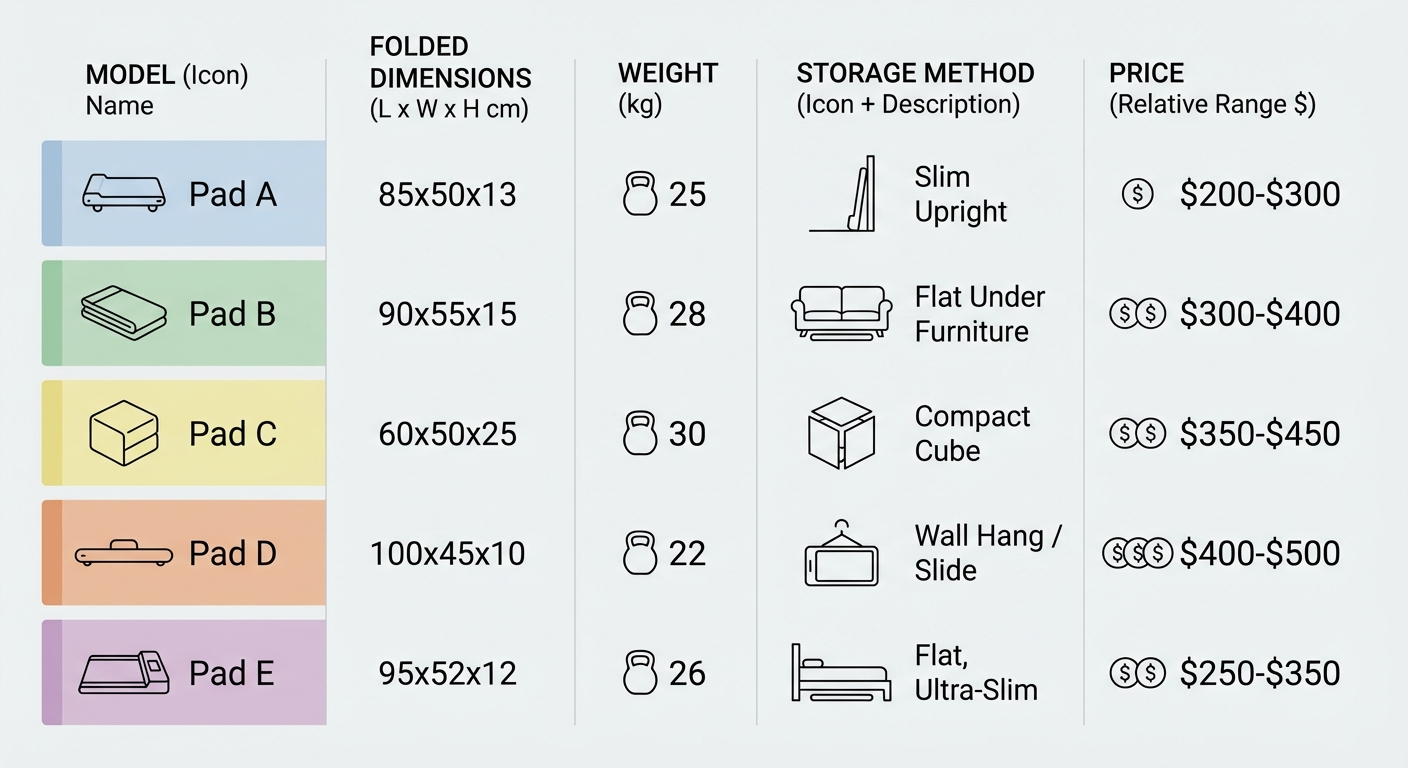
Infographic: Folded size and storage clearance comparison for all five models in this guide.
With five solid options on the table, the right choice usually comes down to four practical questions.
1. Where Exactly Are You Storing It?
Measure the space before you buy. Under a platform bed, you need the folded height (when laid flat) plus 1–2 inches of clearance. Under a sofa, same math. In an upright closet position, you need the folded length to fit within the vertical clearance of your shelving.
2. What Is Your Body Weight?
For a deeper look at weight capacity considerations, our walking pad weight limit guide breaks down what these numbers mean in practice and why staying below the stated maximum matters for both safety and machine longevity.
3. Do You Need to Walk Only, or Also Jog?
If your answer is genuinely "just walking at desk speeds," any machine on this list handles that well. Four out of five cap around 3.7–4 mph, which covers brisk walking comfortably.
If you want to jog even occasionally, only the Goplus 2-in-1 goes fast enough (7.5 mph) to make that worthwhile. See our walking pad vs treadmill comparison if you're still deciding between categories.
4. What Is Your Budget?
The honest budget advice:
- $250–$350: UREVO Foldi Mini — a genuine step up in compactness and weight capacity.
- $300–$380: Goplus 2-in-1 — the only choice if you want jogging capability.
- $380–$450+: WalkingPad C2 or Mobvoi 1S — premium build quality and fold experience.
Storage Tips: Getting the Most Out of a Small Space
Choosing the right machine is step one. Actually maintaining a clean storage habit is step two. These practical tips help.
Use a mat. A walking pad mat (usually 4mm rubber) protects your floors from scratches during use and marks the machine's "home" spot — a visual anchor that makes folding and returning it feel automatic. Many users find that having a defined mat spot is the single biggest habit reinforcement for consistent storage.
Store in the room where you use it. The closer the machine is to where you actually walk, the less friction there is to use it. Storing a walking pad in a garage or storage unit because "it's out of the way" usually means using it zero times a week. Under-bed storage in a home office or bedroom is optimal.
Track your steps to reinforce the habit. One underrated trick: pair your walking pad habit with a habit tracker. Tools like HabitTrackerSpot let you build walking streaks into your daily routine — logging "walked 30 min today" gives you a tangible reward loop that makes you look forward to pulling the machine out, not just tolerating the process.
Wipe the belt monthly. Dust and debris accumulate under the belt over time. A quick wipe with a dry cloth each month, plus silicone lubrication every 3–6 months, keeps the machine running quietly and extends the belt's life significantly.
Never store on carpet without a hard mat. Folding the machine and setting it on thick carpet can restrict ventilation and trap heat around the motor housing. Always use a hard surface mat underneath — both during use and storage if you're placing it on a carpeted floor.
For more on setting up your walking space, see our best walking pads for home office guide, which covers desk height setup and ergonomic positioning in detail.
Frequently Asked Questions
What is the most compact folding walking pad available in 2026?
The UREVO Foldi Mini is the most compact option by folded dimensions, folding to approximately 31 × 20 × 6 inches. It's also the lightest on this list at 44 lbs. The WalkingPad C2 is close behind and folds to a thinner 5-inch profile, making it the better choice if flat under-furniture storage height is your main constraint.
How do folding walking pads fold and unfold?
Most folding walking pads use a central hinge that allows the belt deck to fold in half lengthwise. You grip the front handle, lift, and the deck folds toward the rear, locking automatically via a magnetic or latch mechanism. Unfolding works in reverse — lift the folded section up and let it extend flat. The entire process takes under 10 seconds on a quality machine with no tools required.
Can a folding walking pad support heavier users?
How quiet are folding walking pads during use?
Do folding walking pads need lubrication?
Yes. Most manufacturers recommend lubricating the belt with 100% silicone lubricant every 3–6 months depending on how heavily the machine is used. Signs the belt needs lubrication include increased noise, a slight burning smell, or belt stutter. Never use WD-40, petroleum-based lubricants, or general-purpose oils — these will damage the belt material. The lubrication schedule and instructions are in every model's user manual.
What is the difference between a folding walking pad and a non-folding one?
A folding walking pad has a hinged deck that folds in half, cutting its footprint by roughly 50% for closet or upright storage. A non-folding walking pad is a single flat slab with no hinge — it can slide under furniture but doesn't stand upright or halve in length. Non-folding pads tend to have a slightly lower deck profile (useful for tight under-desk clearance), while folding pads offer more flexibility for true compact storage in varied spaces.
Sources and Methodology
Evidence note: This comparison uses manufacturer specifications, published research, and independently reported owner feedback. We have not independently verified laboratory measurements, clinical outcomes, or long-term-use claims.
-
Manufacturer specifications — Folded dimensions, weight capacities, motor ratings, and speed ranges were sourced directly from product pages and downloadable user manuals for each model reviewed. Where spec pages contradicted packaging or manuals, the more conservative figure was used.
-
American Council on Exercise (ACE) — Caloric expenditure at walking speeds — ACE's metabolic equivalent (MET) tables for low-intensity walking (2–3 mph) were used to contextualize the exercise value of desk-speed walking and the realistic daily step counts achievable with a walking pad. https://www.acefitness.org/resources/everyone/exercise-library/
-
National Institute for Occupational Safety and Health (NIOSH) — Ergonomics and sustained standing/walking posture — NIOSH guidelines on workstation ergonomics and prolonged low-level activity informed the desk height and posture recommendations in this guide. https://www.cdc.gov/niosh/topics/ergonomics/
-
Fogg, B.J. — Tiny Habits (2019) — The behavioral friction model referenced in the storage discussion draws on Fogg's work on habit design, specifically the concept that reducing activation energy for a behavior increases its frequency. Published by Houghton Mifflin Harcourt.
Have a question about a model not covered here? The best walking pads of 2026 roundup covers over fifteen models across all price points.
Last updated: March 26, 2026 | James Whitfield, Fitness Equipment Reviewer