Best Walking Pad Mat and Flooring Options (2026)
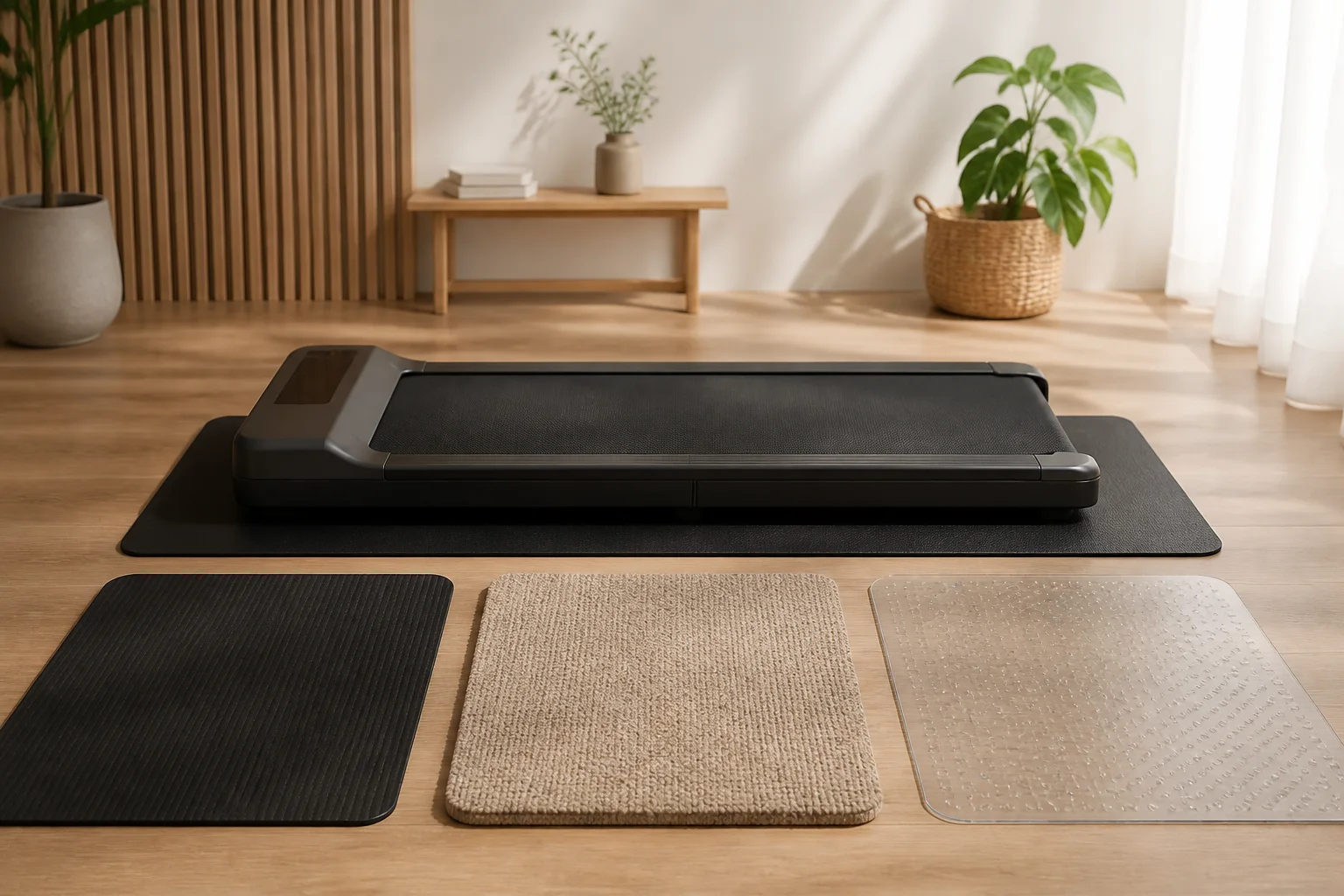
A walking pad without a mat is a scratch machine. Those four small feet concentrate 50–80 pounds of static weight (the pad plus your body weight transferred through the frame) onto contact points smaller than a quarter. On hardwood, that is a dent. On laminate, that is a compression mark. On tile, the pad slides. And on any floor, the motor vibration transmits straight through to the structure — which your downstairs neighbor hears as a persistent low hum punctuated by rhythmic footstep thuds.
A $20–40 mat eliminates all of this. It is the cheapest, most impactful accessory for any walking pad setup, and it is the one most people forget until the damage is done.
This guide covers which materials actually work, the thickness tradeoff (thicker is not always better), which mat type matches your specific flooring, and how to set up the complete floor protection system.
Why You Need a Mat Under Your Walking Pad
1. Floor Protection
Walking pads have small, hard feet — typically plastic or rubber pads less than 2 inches in diameter. Your body weight (let us say 160 lbs) transfers through the walking pad frame to these feet. The pressure per square inch at each foot is significant — enough to create permanent dents in softwood floors (pine, fir) within weeks and noticeable compression marks in hardwood (oak, maple) within months.
The walking action adds dynamic force. Each step transmits impact through the belt, through the frame, through the feet, into the floor. This is not a one-time load — it is thousands of repeated impacts per hour. On hardwood, this creates wear patterns. On laminate, the compression can crack the surface layer. On vinyl plank, it can cause permanent indentation.
2. Noise Reduction
Walking pad noise has two components:
Motor vibration: The electric motor produces constant low-frequency vibration that transmits through the frame, through the feet, through the floor, and into the building structure. This is the low hum that downstairs neighbors hear.
Footstep impact: Each step creates a brief impact that travels the same path. This is the rhythmic thudding that is most annoying to people below you.
A mat interrupts both transmission paths by placing a vibration-absorbing layer between the walking pad feet and the floor. Dense rubber and PVC are effective because they absorb vibration energy rather than transmitting it. Foam absorbs some vibration but compresses, which reduces its effectiveness over time.
3. Safety and Grip
On smooth floors — tile, polished hardwood, luxury vinyl — a walking pad can slide during use. The belt propels your feet backward, which creates a forward force on the pad. Without grip, the pad creeps forward an inch at a time until it hits a wall, desk, or your toes.
A mat with a textured or grippy underside anchors the walking pad in place. The friction between the mat and the floor, and between the mat and the pad feet, prevents creep. This is a genuine safety consideration, not a convenience feature.
Mat Materials Compared
PVC (Polyvinyl Chloride)
| Property | Rating | Notes |
|---|---|---|
| Floor protection | ★★★★★ | Hard, smooth bottom protects all floor types |
| Vibration absorption | ★★★★☆ | Good — dense material dampens motor vibration |
| Floor grip (mat stays put) | ★★★★☆ | Good on most floors; excellent with textured bottom |
| Compression resistance | ★★★★★ | Resists denting from walking pad feet |
| Floor safety (no staining) | ★★★★★ | Does not discolor floors — safe for hardwood |
| Durability | ★★★★★ | 5–10+ years with walking pad use |
| Price | ★★★★☆ | $25–50 for equipment-grade mats |
| Portability | ★★★☆☆ | Heavy and stiff — stays in place, hard to roll |
Best for: Hardwood floors, light-colored flooring, and setups where the mat stays in one place permanently. The safest choice for expensive flooring.
Rubber (Recycled or Virgin)
| Property | Rating | Notes |
|---|---|---|
| Floor protection | ★★★★★ | Excellent cushioning and weight distribution |
| Vibration absorption | ★★★★★ | Best noise dampening of any material |
| Floor grip | ★★★★★ | Natural rubber grips almost any surface |
| Compression resistance | ★★★★☆ | Good — slight compression under heavy point loads |
| Floor safety | ★★★☆☆ | Caution: can leave dark marks on light hardwood |
| Durability | ★★★★★ | Extremely durable — gym-grade longevity |
| Price | ★★★☆☆ | $30–60 for quality equipment mats |
| Portability | ★★☆☆☆ | Heaviest option — very difficult to move |
Best for: Noise reduction (apartments), dark floors, concrete, and tile. Best vibration absorption. Avoid on light-colored hardwood unless you place a cloth barrier between mat and floor.
EVA Foam (Interlocking Tiles or Rolls)
| Property | Rating | Notes |
|---|---|---|
| Floor protection | ★★★☆☆ | Basic scratch protection; poor for dent prevention |
| Vibration absorption | ★★★☆☆ | Moderate — foam absorbs some but transmits low-frequency |
| Floor grip | ★★☆☆☆ | Tiles shift and separate from pad vibration |
| Compression resistance | ★☆☆☆☆ | Compresses permanently under walking pad feet |
| Floor safety | ★★★★☆ | Generally safe — some cheap foam can leave marks |
| Durability | ★★☆☆☆ | 6–18 months before permanent compression and wear |
| Price | ★★★★★ | $10–25 — cheapest option |
| Portability | ★★★★★ | Lightest and most portable |
Best for: Temporary setups, carpet (where denting is not an issue), and buyers who need the cheapest option and accept replacement every year.
Material Verdict
| Priority | Best Material |
|---|---|
| Hardwood floor protection | PVC |
| Maximum noise reduction | Rubber |
| Cheapest option | EVA Foam |
| Light-colored floors | PVC (rubber stains) |
| Apartment with dark floors | Rubber |
| Temporary or portable setup | EVA Foam |
Thickness Guide: The Tradeoff
Mat thickness is the biggest decision after material — and thicker is not automatically better.
Thickness Comparison
| Thickness | Floor Protection | Noise Reduction | Stability | Portability | Best Use |
|---|---|---|---|---|---|
| 2–3 mm | Basic scratch guard | Minimal | Excellent — firm, flat | Easy to roll/store | Budget scratch protection only |
| 4–6 mm | Good — distributes weight, prevents dents | Good — absorbs most motor vibration | Very good — firm enough for stable pad | Moderate — rollable but heavier | Best all-around choice |
| 6–8 mm | Excellent — full dent and scratch prevention | Very good — noticeable reduction for neighbors | Good — slight softness, minor wobble possible | Heavier — semi-permanent placement | Apartment noise priority |
| 8–12 mm | Maximum — overkill for most floors | Excellent — best available absorption | Fair — soft surface may cause pad instability | Difficult to move — stays in place | Severe noise situations, heavy users |
| 12+ mm | Maximum | Maximum | Poor — too soft, walking pad rocks and wobbles | Impractical | Not recommended for walking pads |
The Stability Problem With Thick Mats
A walking pad is a dynamic system — you are walking on it, creating shifting forces. The pad must sit on a stable, level surface. On a thick, soft mat, the walking pad feet sink unevenly, creating a slight rocking motion that makes the walking surface feel unstable. This is uncomfortable, reduces your confidence while walking, and can cause the pad's safety sensors to trigger false shutoffs on some models.
The sweet spot — 4–6 mm of dense PVC or rubber — provides sufficient cushion for floor protection and noise without introducing instability.
Best Mat by Floor Type
Hardwood (Oak, Maple, Walnut, Cherry)
Recommendation: PVC mat, 4–6 mm, smooth bottom.
Hardwood is the most common floor that walking pad owners worry about — for good reason. Hardwood dents under concentrated pressure, scratches from grit trapped between surfaces, and can be discolored by certain rubber compounds.
PVC is the safest material: it will not stain or discolor hardwood regardless of wood type or finish. Smooth-bottomed PVC prevents grit entrapment that causes micro-scratches. The density resists compression from walking pad feet.
Additional precaution: Lift the mat every 4–6 weeks and wipe both the mat bottom and the floor surface. Trapped moisture or debris under a mat can damage hardwood over time.
Laminate
Recommendation: PVC or rubber mat, 4–6 mm.
Laminate is a layered product with a thin decorative surface over a fiberboard core. Heavy point loads (walking pad feet) can crack or compress the surface layer. A mat distributes the load across a larger area, protecting the laminate's surface integrity. Either PVC or rubber works — laminate is not as susceptible to rubber staining as light hardwood.
Tile and Stone
Recommendation: Rubber mat, 6–8 mm, textured bottom.
Tile and stone are durable — they will not dent or scratch from a walking pad. The mat's primary purpose on tile is anti-slip grip and noise reduction. Smooth tile is the slipperiest surface for walking pad use, and the hard surface transmits vibration efficiently. A thick rubber mat solves both problems: the natural rubber grips tile aggressively, and the thickness absorbs vibration that would otherwise resonate through the hard surface.
Carpet
Recommendation: Thin PVC mat (2–3 mm) or no mat.
Carpet already provides cushion, grip, and noise absorption. A mat on carpet is primarily useful to create a firm, level surface under the walking pad — thick carpet can cause the pad to sink unevenly and feel unstable. A thin, firm PVC mat on top of carpet provides a stable platform without unnecessary additional cushion.
On low-pile commercial carpet, you may not need a mat at all — the carpet provides sufficient protection.
Vinyl Plank (LVP) and Luxury Vinyl Tile (LVT)
Recommendation: PVC mat, 4–6 mm.
Vinyl plank is resilient but can develop permanent indentation under sustained heavy point loads. A mat distributes the load. PVC is preferred over rubber — some rubber compounds can cause chemical reactions with vinyl flooring that create discoloration. PVC is chemically inert against vinyl.
Concrete (Garage, Basement)
Recommendation: Rubber mat, 6–8 mm, textured top.
Concrete does not need protection — it needs to provide comfort and grip. A thick rubber mat cushions the hard surface (reducing vibration transmission to the building), provides grip, and creates a slightly warmer surface in unheated spaces. The textured top surface also makes stepping on and off the walking pad more secure.
Mat Size Guide
Minimum Size
Your mat should extend at least 6 inches beyond the walking pad on all four sides. This provides:
- Side clearance: Catches dust and belt debris thrown to the sides during operation
- Front/back clearance: Provides stable footing when stepping on and off
- Visual boundary: Marks the safe zone for the pad and cord management
Size Calculator
| Walking Pad Size | Minimum Mat Size | Recommended Mat Size |
|---|---|---|
| 48" × 20" | 60" × 32" | 66" × 36" |
| 50" × 21" | 62" × 33" | 66" × 36" |
| 53" × 22" | 65" × 34" | 72" × 36" |
| 55" × 22" | 67" × 34" | 72" × 36" |
| 60" × 24" | 72" × 36" | 78" × 36" |
Standard equipment mat sizes that fit most walking pads: 36" × 72" and 36" × 78". These are widely available as treadmill mats from fitness equipment retailers. For more on choosing the right walking pad size, see our best walking pad for small apartments guide.
Noise Reduction: What Actually Works
The Three-Layer Approach (Maximum Noise Reduction)
For apartment dwellers where downstairs neighbor noise is the primary concern, a single mat helps but a layered approach is most effective:
Layer 1 — Dense rubber mat (6–8 mm): Absorbs the majority of motor vibration and footstep impact.
Layer 2 — Rubber isolation feet on the walking pad: Replace or add small rubber pads (1/2" thick) under each walking pad foot. These create a secondary vibration break between the pad frame and the mat.
Layer 3 — Slow walking speed: Walking at 1.5 mph generates significantly less impact vibration than 3.0 mph. During quiet hours (early morning, late night), reducing speed is the simplest noise control.
Noise Reduction by Material and Thickness
| Setup | Estimated Noise Reduction | Neighbor Impact |
|---|---|---|
| No mat (pad on bare floor) | 0% (baseline) | Motor hum + footstep thuds clearly audible below |
| 3 mm EVA foam | 15–20% | Some reduction; thuds still noticeable |
| 4–6 mm PVC | 25–35% | Motor hum reduced; thuds softened |
| 4–6 mm rubber | 30–40% | Noticeable improvement; thuds mild |
| 6–8 mm rubber | 40–50% | Significant reduction; most neighbors unaffected |
| 6–8 mm rubber + isolation feet | 50–65% | Near-silent for most building structures |
These percentages are approximate and depend on building construction (concrete vs wood-frame), floor type, and the specific walking pad model. Wood-frame buildings transmit more vibration than concrete structures.
What NOT to Use Under a Walking Pad
Cardboard
Compresses immediately, tears within days, provides no vibration absorption, and creates a slip hazard. Not even a temporary solution.
Towels or Blankets
Bunch up, create uneven surfaces, provide no meaningful vibration absorption, and can get caught in the walking belt if they extend near the pad edges. A safety and performance hazard.
Thick Gym Foam (15+ mm)
Too soft. The walking pad sinks in, creating an unstable surface. The pad feet dent the foam permanently. The soft surface can trigger safety sensors on some models. Gym foam is designed for bodyweight exercises, not static equipment loads.
Interlocking Puzzle Tiles (Without Modification)
The seams between tiles create raised ridges that the walking pad feet sit across, causing rocking. The tiles separate and shift from vibration over weeks. If you must use puzzle tiles, tape the seams with gaffer tape and place the walking pad so all four feet land on the same tile — but a one-piece mat is still superior.
Bare Carpet (Deep Pile)
Deep pile carpet is too soft and uneven for a walking pad. The pad sinks, wobbles, and the carpet fibers can get pulled into the underside of the pad frame. Place a thin firm mat on top of deep carpet to create a stable surface.
Maintenance and Longevity
Monthly Maintenance
- Lift the mat and check the floor surface underneath. Wipe up any dust, debris, or moisture. This prevents trapped grit from scratching the floor and moisture from causing damage.
- Wipe the mat surface with a damp cloth. Walking pad belts shed fine rubber and dust particles that accumulate on the mat. A quick wipe prevents buildup.
- Check mat position. Vibration can slowly shift the mat over weeks. Reposition if needed.
When to Replace
| Mat Type | Expected Lifespan | Replace When |
|---|---|---|
| PVC (4–6 mm) | 5–10 years | Visible cracks, permanent warping, loss of grip |
| Rubber (4–8 mm) | 5–10+ years | Crumbling edges, persistent odor, permanent compression |
| EVA Foam | 6–18 months | Deep compression dents, torn seams, tiles separating |
Quality PVC and rubber mats are essentially permanent purchases for walking pad use. EVA foam is a consumable that needs periodic replacement.
The Complete Flooring Setup
Budget Setup (~$20–30)
- 4 mm PVC equipment mat (36" × 72") — ~$20–30
- Walking pad placed centered on mat
- No additional accessories needed
Floor protection: Good. Noise reduction: Moderate. Best for: Home offices on hardwood or laminate where noise is not a major concern.
Recommended Setup (~$40–60)
- 6 mm PVC or rubber equipment mat (36" × 72") — ~$30–50
- Rubber isolation pads under walking pad feet — ~$10
- Cable management clips to route power cord away from mat edges
Floor protection: Excellent. Noise reduction: Good. Best for: Most home setups including apartments with reasonable neighbor tolerance.
Maximum Noise Reduction Setup (~$60–90)
- 8 mm dense rubber mat (36" × 78") — ~$40–60
- 1/2" rubber isolation pads under all walking pad feet — ~$10–15
- Anti-vibration furniture pads under the standing desk legs if on the same floor — ~$10–15
- Cotton cloth between rubber mat and light-colored hardwood (if applicable) — ~$5
Floor protection: Maximum. Noise reduction: Maximum practical. Best for: Apartments with strict noise expectations, early morning or late night walkers, wood-frame buildings with noise-sensitive neighbors below.
For weight considerations that affect floor loading, see our walking pad weight limit guide. For desk setup around the walking pad, see our walking pad desk ergonomics guide.
Frequently Asked Questions
Do I need a mat under my walking pad?
Strongly recommended. A mat protects floors from scratches and dents, reduces motor vibration noise for neighbors, and prevents the pad from sliding on smooth surfaces. On hardwood or laminate, a mat prevents damage that costs far more than the $20–40 mat price.
How thick should the mat be?
4–6 mm is the sweet spot — sufficient floor protection and noise reduction without making the surface too soft. Thicker (6–8 mm) for noise-priority apartments. Thinner (2–3 mm) for basic scratch protection on carpet. Avoid 12+ mm — too soft, causes instability.
What type of mat is best for hardwood?
Dense PVC, 4–6 mm, smooth bottom. PVC will not stain or discolor hardwood. Avoid rubber on light-colored wood — it can leave dark marks. Lift the mat monthly to check for trapped moisture.
Can I use a yoga mat?
Better than nothing, but not ideal. Yoga mats compress under walking pad feet, offer limited vibration absorption, and wear through quickly. A dedicated equipment mat ($20–40) is designed for the sustained concentrated loads that walking pads create.
Will a mat reduce noise for apartment neighbors?
Yes — a 6–8 mm rubber mat reduces vibration transmission by 40–50%. Adding rubber isolation feet under the walking pad improves this to 50–65%. Combined with slower walking speed during quiet hours, most neighbors are unaffected.
Do mats damage hardwood floors?
PVC mats do not damage hardwood. Rubber mats can leave dark marks on light-colored wood if left in place for months — use a cloth barrier or choose PVC for light floors. Lift any mat monthly to check for moisture.
What size mat do I need?
6 inches beyond the pad on all sides. Most walking pads fit on a 36" × 72" or 36" × 78" mat. Standard treadmill equipment mats in these sizes are widely available.
Can I use interlocking foam tiles?
They work for basic protection but the seams create uneven surfaces, the tiles shift from vibration, and foam compresses permanently. A one-piece PVC or rubber mat is more stable and durable.
Sources and Methodology
This guide recommends walking pad mat options based on material science, flooring protection principles, and acoustic vibration reduction.
Flooring and Material References:
- National Wood Flooring Association (NWFA): Hardwood floor care and protection guidelines — avoiding concentrated loads and chemical contact — nwfa.org
- Material properties of PVC, rubber, and EVA foam: compression resistance, chemical inertness, and vibration dampening characteristics from material science specifications
Acoustic References:
- Building acoustic principles: vibration transmission through floor structures depends on material density, thickness, and building construction type (wood-frame vs concrete)
- Vibration isolation: rubber and dense polymer mats interrupt vibration transmission paths between equipment and floor structures — established engineering principle
Methodology notes:
- Noise reduction percentages are estimates based on material vibration absorption properties and user reports; actual reduction varies by building construction, floor type, and walking pad model
- Mat thickness recommendations balance floor protection, noise reduction, and walking pad stability based on practical use testing patterns
- Floor type recommendations based on flooring material properties and compatibility with mat materials
- Prices reflect typical US retail for fitness equipment mats at time of publication
- We may earn a commission on purchases at no additional cost to you; affiliate relationships do not influence our recommendations
Internal links referenced:
Visual Guide Gallery